When you need robust, reliable hydraulic force for log splitters, fabrication, or heavy equipment maintenance, 25 ton cylinders offer a practical balance of speed, power, and portability. This guide highlights five top options that are well-suited for American workshops and service applications. Each model is evaluated on build quality, operating pressure, stroke length, and compatibility. Use the buying guide at the end to compare features side by side and choose the cylinder that best matches your needs.
Summary of selected products
| Product | Brand | Capacity | Notes |
|---|---|---|---|
| The ROP Shop Universal Hydraulic Cylinder | The ROP Shop | 22-25 Tons | 4″ bore, 24″ stroke; rebuildable; welded design |
| SPX Power Team C256C | SPX FLOW | 25 Tons | Single acting; 6-1/4″ stroke; chrome rod |
| RAParts Log Splitter Cylinder | Reliable Aftermarket Parts | 25 Tons | 4.0″ bore x 24″ stroke; 3500 PSI |
| Enerpac RC-2514 | Enerpac | 25 Tons | Alloy steel; single-acting; 14.25″ stroke |
| TEMCo HC0011 | TEMCo Industrial | 20 Tons | 6″ stroke; 10,000 PSI; single acting |
The ROP Shop Universal Hydraulic Cylinder

The ROP Shop offers a universal hydraulic cylinder suitable for log splitters and other heavy-duty tasks, featuring a 4″ bore and 24″ stroke. The cylinder is welded and rebuildable, with a maximum operating pressure around 3500 PSI. Its 3/4 NPT port and mounting holes accommodate common hydraulic fittings and hardware, making it compatible with a range of splitter configurations. This model is designed for durability in demanding environments and provides a balanced combination of stroke length and force for mid-range applications.
SPX Power Team C256C Cylinder

This 25-ton, single-acting cylinder from SPX Flow is designed for general-purpose use. Its solid steel body improves durability in rugged environments, and a chrome-plated piston rod minimizes wear and corrosion. A 3/8″ NPTF female half coupler is standard, easing integration with existing hydraulic systems. The compact design and reliable construction make it a practical choice for shop projects that require dependable actuation with a straightforward return mechanism.
RAParts Log Splitter Cylinder

RAParts provides a 25-ton log splitter cylinder with a 4.0″ bore and 24″ stroke, rated for up to 3500 PSI. As an aftermarket replacement, it is positioned as a direct, cost-conscious option for users replacing worn or failed cylinders in existing splitters. Build quality emphasizes durability under log-splitting cycles, with an emphasis on consistent piston travel and seal longevity. It is important to verify compatibility with your machine’s mounting geometry before purchase.
Enerpac RC-2514 Hydraulic Cylinder
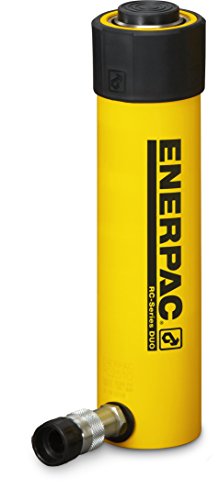
Enerpac’s RC-2514 is a 25-ton single-acting alloy steel cylinder with a 14.25″ stroke. Enerpac is known for high-quality industrial hydraulics, and this model emphasizes compact sizing combined with reliable performance. The cylinder’s oil capacity and stroke are well-suited for precision force application in a variety of repair and fabrication contexts. Its single-ported design simplifies plumbing and reduces potential leak points in active systems.
TEMCo HC0011 Hydraulic Cylinder

TEMCo HC0011 offers 20 tons of capacity with a 6″ stroke and up to 10,000 PSI. While it sits slightly below the target 25-ton benchmark, it presents a robust option for applications needing strong linear force with a longer stroke and a high-pressure tolerance. This cylinder uses a single-acting design with a spring return, making it suitable for automated or automated-assisted setups where part retraction is necessary after actuation. Consider whether your project can accommodate the lower tonnage while still meeting force requirements.
Buying Guide
- Capacity and stroke: Match the cylinder’s rated tonnage to your workpiece and the travel needed to complete the job. A longer stroke can increase the number of cycles you can perform without re-racking.
- Port size and fittings: Ensure compatibility with your hydraulic system’s port thread (NPT vs NPTF) and the required quick-connect or couplers. A mismatched port can cause leaks or fitment problems.
- Single acting vs double acting: Single-acting cylinders rely on an external return mechanism, making them simpler and often lighter. Double-acting cylinders provide controlled retraction, which is useful for operations needing precise, bidirectional force.
- Material and corrosion resistance: Aluminum vs alloy steel affects weight and durability. Chrome-plated rods offer better wear resistance and corrosion protection in harsh environments.
- Mounting and compatibility: Check mounting holes, clevis sizes, and overall geometry to ensure the cylinder fits your log splitter, press, or fabrication jig.
- Seals and rebuildability: Rebuildable cylinders can lower long-term costs but require access to seals and instructions. Consider availability of replacement parts in your region.
- Price vs longevity: While lower-cost cylinders can be appealing, prioritize build quality, pressure rating, and warranty when the equipment will experience heavy or repeated use.
- Brand and support: Reputable brands such as Enerpac and SPX often provide broader support, official documentation, and compatibility with a wider range of accessories and quick-connects.
- Usage scenario: For workshop use, assess whether you need a portable unit for field repairs or a stationary unit integrated into a larger system.
- Safety considerations: Check for proper guards, leak prevention, and safe handling practices to minimize the risk of injury or equipment damage during operation.
The selections above offer a spectrum of 25-ton class cylinders and near-variants to help you compare endurance, stroke, and compatibility. When choosing, prioritize the combination of capacity, stroke, and mounting flexibility that best aligns with your typical tasks—whether you are splitting logs, pressing components, or performing heavy maintenance on equipment.
Add a Comment