Choosing a commercial screen printing machine requires balancing speed, precision, and space. This guide highlights five top options to help businesses and studios print in bulk with consistent results. Each model offers distinct capabilities—ranging from multi-color, multi-station setups to compact, space-saving designs. Review features, sizes, and applications to find the best fit for textiles, plastics, and other flat materials.
Summary of Selected Products
| Product | Color/Stations | Printing Area | Key Benefit | Amazon Link |
|---|---|---|---|---|
| VEVOR Screen Printing Machine, 4 Color 4 Station | 4 Color, 4 Station | 21.2 x 17.7 in / 54 x 45 cm | High productivity with stable positioning | View |
| VEVOR Screen Printing Machine, 4 Color 1 Station | 4 Color, 1 Station | 21.2 x 17.7 in / 54 x 45 cm | Compact and precise for limited spaces | View |
| VEVOR Screen Printing Machine, 1 Color 1 Station | 1 Color, 1 Station | 21.2 x 17.7 in / 54 x 45 cm | Adjustable tension and versatile pallets | View |
| VEVOR Screen Printer 4 Color 2 Station | 4 Color, 2 Station | 21.2 x 17.7 in / 54 x 45 cm | Balanced dual-station design for efficiency | View |
| Speedball Beginner Screen Printing Kit | Kit | — | Easy entry for quick at-home projects | View |
VEVOR 4 Color 1 Station Screen Printing Machine

Design focuses on space efficiency with a stable 360° rotatable fuselage and independent metal bearings for precise registration. The 4-color capability suits small- to mid-size runs on T-shirts and flat items. A double-layer positioning pallet reduces misalignment, supporting repeatable results when printing multiple colors. The system is ideal for users with limited workspace or those who print occasionally but need reliable, repeatable outcomes for DIY apparel, home textiles, and other flat materials.
VEVOR 1 Color 1 Station Silk Screen Printing Press

This model emphasizes adjustable tension and an adaptable pallet system. With a single color and station, it’s well-suited for beginners or focused runs on smaller orders. Its double-layer positioning design helps maintain alignment, while the adjustable tension accommodates different screen weights. It’s particularly useful for studios handling a mix of fabrics and flat surfaces, including apparel, pillows, and home goods, where space considerations and accurate placement matter most.
VEVOR 4 Color 4 Station Screen Printing Machine

The 4-color, 4-station configuration maximizes throughput for batches, enabling simultaneous multi-color designs. The 360° rotatable fuselage with independent bearings ensures stable operation and precise registration. The double-layer pallet design minimizes deviation, offering repeatable results across multiple runs. Suitable for textiles, paper, plastics, and other flat materials, this model is a workhorse for small to medium production lines with space that can accommodate a larger footprint.
VEVOR 4 Color 2 Station Screen Printer

This model blends higher output with flexible handling through two stations. The 360° rotatable fuselage and independent bearings maintain alignment across color passes. The 4-color configuration is suitable for more complex designs on apparel and flat goods, while the second station helps reduce cycle times by allowing one part of the print to proceed while the other is prepped. The device remains compact for studios expanding into faster throughput without overhauling existing space.
Speedball Beginner Screen Printing Kit
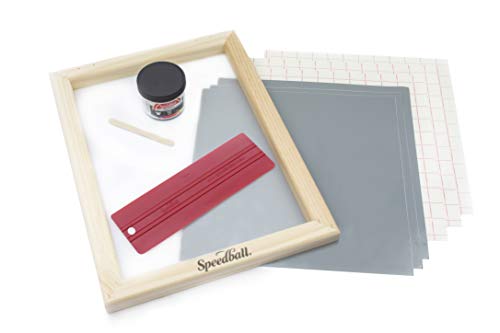
Designed for newcomers, this kit blends vinyl crafting with screen printing for quick, simple projects at home. It offers a fast entry into screen printing without the complexity of full-scale commercial presses. Ideal for small, on-demand runs or proofing designs before expanding to larger production lines. The kit emphasizes ease of use and minimal setup, making it a practical first step for hobbyists and home-based businesses.
Buying Guide
Key purchase considerations for commercial screen printing machines include the following:
- Production capacity: Assess color count and number of stations. More colors and stations typically raise throughput, but also size requirements and costs.
- Printer stability and precision: Look for rotatable or fixed frames with independent bearings, robust clamping, and precise alignment features to minimize misregistration across passes.
- Workspace and footprint: Compare footprints relative to available studio space. Compact units suit smaller shops, while larger configurations suit high-volume production.
- Palet and tension: Double-layer pallets and adjustable tension improve stability for diverse substrates and screen weights.
- Material compatibility: Ensure the machine supports your typical substrates (textiles, plastics, paper, leather, ceramics) and desired printing area.
- Maintenance and build quality: Stainless or coated frames resist wear; consider maintenance ease and component accessibility for long-term use.
- Future scalability: Consider modular options or upgrades (additional stations/colors) to grow throughput without a full replacement.
- Cost vs. benefit: Balance upfront cost with expected monthly output, maintenance, and energy use to determine total cost of ownership.
Overall, multi-color, multi-station machines are best for higher-volume operations, with robust positioning systems ensuring repeatable results. Compact, single-station presses excel in smaller shops or for prototyping. Accessories and beginner kits provide accessible routes into screen printing without committing to a large setup. When evaluating options, align product capabilities with your target runs, substrate variety, and available space to achieve the best long-term value.
Add a Comment