Choosing the right servo motor can dramatically improve efficiency, noise levels, and fabric handling on industrial sewing machines. This guide highlights five top-rated options that balance torque, speed, durability, and energy savings. Each product is evaluated for compatibility with common industrial machines, quiet operation, and long-term reliability. The following sections provide quick references, visual context, and practical buying considerations to help you decide which servo motor best fits your production needs.
| Product | Brand | Power | Top Speed | Key Benefit |
|---|---|---|---|---|
| Servo Motor Sewing Machine, 550W | Lonsge | 550W | 6000 RPM | Low-noise, energy-saving |
| Industrial Servo Motor, 1000W | Lonsge | 1000W | 6000 RPM | Durable, high-torque |
| 550W Energy Efficient Servo | SMUDUKKIT | 550W | 3450 RPM | High starting torque |
| Sewing Machine Servo Motor, 550W | Lonsge | 550W | 3450 RPM | Efficient and quiet |
| Servo Motor, 750W | Lonsge | 750W | 6000 RPM | Energy saving and silent |
| Servo Motor, 750W, SYLPHID | SYLPHID | 750W | 6000 RPM | Heavy-duty and reliable |
1) Lonsge 550W Industrial Servo Motor

The 550W servo motor from Lonsge is designed for compatibility with a wide range of industrial sewing machines. It is a three-phase brushless motor that includes a controller, foot switch, and essential mounting parts. Key specifications include AC110V operation, 3/4 horsepower, and a usable speed range from 200 RPM up to 6000 RPM. Notable features emphasize energy savings—up to 70% compared with traditional clutch motors—and quiet, smooth running that minimizes vibration during production cycles. The motor is built with a compact design and a market-standard pulley size, facilitating straightforward retrofits and upgrades.
Considerations: When integrating this unit, ensure your machine’s belt system aligns with the included pulley and that the controller wiring is compatible with your current control setup. The gear and copper coil build support durability under continuous operation, making it a strong value choice for mid- to high-volume sewing applications.
2) Lonsge 1000W Industrial Servo Motor
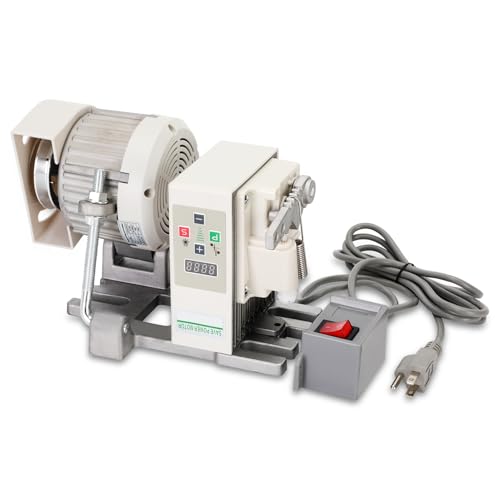
This higher-powered model provides 1000W of servo power and a robust 6000 RPM top speed for demanding sewing tasks. It ships with a brushless motor, controller, foot switch, and mounting components, designed to deliver smooth, quiet operation on heavy-duty industrial machines. The aluminum heat sink and pure copper coils help maintain stable temperatures during long runs, supporting consistent performance and longer service life. This unit is well-suited for fabrics that require frequent high-speed stitching without overheating or power dips.
Considerations: For high-speed production lines, verify your machine’s drive train tolerance to 6000 RPM and confirm electrical compatibility with your setup. The durable metal frame and high-temperature resistance contribute to reliability in busy facilities.
3) 550W Energy Efficient Servo by SMUDUKKIT

The SMUDUKKIT servo motor offers 550W of power with 3/4 horsepower and a maximum speed of 3450 RPM. It emphasizes high starting torque, a feature that helps handle thick or high-density fabrics without stalling. The unit supports a wide speed range, enabling precise control for delicate stitching as well as rapid seams. Its design highlights energy efficiency and adaptable mounting options, making it compatible with various industrial machines that rely on belt-driven systems.
Considerations: If your workflow includes frequent starts and stops or heavy fabric layers, this motor’s torque profile can reduce downtime. Check that the included mounting components align with your machine’s frame and that the control system integrates with the provided controller.
4) Lonsge 550W 3450RPM Servo Motor

This Lonsge model delivers 550W with a 3450 RPM rated speed, offering a balanced profile suitable for many industrial sewing tasks. It emphasizes efficiency and quiet operation, making it a practical upgrade for facilities seeking lower noise without compromising performance. The motor’s sturdy metal casing and protective design support long-term durability, while its universal compatibility ensures it can work with a broad array of belt-driven, overlock, and twin-needle machines. Energy savings are a central claim, contributing to reduced operating costs over time.
Considerations: While lower than the maximum RPM options, 3450 RPM is ample for consistent stitch quality on a variety of fabrics. Ensure the machine’s electrical requirements match AC110V and that the mounting footprint aligns with your frame.
5) SYLPHID 750W Industrial Servo Motor

The SYLPHID servo motor features a full metal body with a robust construction designed for heavy-duty industrial sewing. It offers 750W of power and a top speed up to 6000 RPM, with a focus on energy savings and quiet operation. The universal fit makes it compatible with major brands, including Juki, Brother, and Singer, across flatbed, twin-needle, overlock, and serger configurations. The combination of durable materials and efficient performance supports long service life in demanding production environments.
Considerations: For high-volume sewing floors, assess the motor’s ability to maintain stable performance at higher RPMs and ensure adequate space for mounting and heat dissipation. The unit’s high-speed capability is a key advantage for speed-focused lines.
Buying Guide: Key Purchase Considerations
When selecting an industrial sewing machine servo motor, balance power, speed, durability, and energy efficiency. Consider the following factors to compare options effectively:
- Power and torque: Higher wattage generally translates to greater torque, aiding stitching on thick fabrics and under heavy feed pressure.
- Speed range: A broad RPM range provides flexibility for delicate stitching and fast seams. Confirm the maximum RPM aligns with your machines’ needs.
- Control system compatibility: Ensure the motor’s controller, foot switch, and wiring match your existing control setup and safety standards.
- Durability: Metal frames, copper windings, and good heat dissipation reduce wear and service interruptions in production environments.
- Noise and vibration: Quieter operation reduces shop floor fatigue and helps meet workplace standards for noise.
- Compatibility: Verify belt drive compatibility and mounting hardware to fit your specific machine models and brands.
- Energy efficiency: Motors advertised as energy-saving can lower operating costs over time and support sustainability goals.
- Maintenance and support: Consider availability of manuals, installation parts, and after-sales support when selecting a supplier.
In practice, matching a motor to your sewing machines involves checking electrical voltage (commonly AC110V in these products), pulley sizes, and the mechanical fit of the mounting points. For facilities prioritizing quiet operation and energy savings, models emphasizing low noise and high efficiency are typically preferred. For high-volume lines, higher torque and robust cooling features can reduce downtime and extend equipment life.
Add a Comment