Industrial walking foot sewing machines are built to handle heavy fabrics, multiple layers, and demanding production schedules. This guide highlights five top options for pros seeking reliability, precision, and efficiency. Each entry includes core features, a quick visual, and practical considerations to help buyers compare performance, durability, and compatibility across common sewing tasks such as leather, denim, and thick upholstery.
Summary of chosen products (quick reference):
| Product | Brand | Key Features |
|---|---|---|
| Consew 206RB-5 Walking Foot Industrial Sewing Machine | CONSEW | Triple feed walking foot, extra-long stitch length, large bobbin, adjustable walking motion |
| CUBELLIN 8700 Head Walking Foot Machine | CUBELLIN | Durable iron build, adjustable gauge, manual presser foot lift |
| Juki DNU-1541 Industrial Walking Foot | JUKI | High-speed stitching, strong speed, long machine length for heavy tasks |
| Walking Foot for Brother Machines – Thick Fabrics | HUFFEKISS | Universal compatibility, 1/4-inch guide, open-toe design |
| 6500RPM Industrial Sewing Machine (Leather Upholstery) | ZzuaofxuuY | High-power copper motor, high speed, versatile needle length |
Consew 206RB-5 Walking Foot Industrial Machine

The Consew 206RB-5 is a popular choice among professionals who require dependable heavy-duty performance. It features a walking foot compound feed (triple feed) to reliably move fabric through multiple layers. A notable attribute is the long maximum stitch length of 10 mm, suitable for bold topstitching or seam reinforcement on leather and thick materials. The machine offers a high foot lift, reaching 9/16″ (14 mm), and a large bobbin for extended sewing runs. Its adjustable walking motion adds versatility for varied fabrics and thicknesses. This model is designed for durability and consistent results in production settings.
CUBELLIN 8700 Head Walking Foot

The CUBELLIN 8700 focuses on robust construction and user-friendly control. Built with high-quality iron and reinforced with a high-temperature spray treatment, it emphasizes durability and longevity. The machine offers clearly marked gauge chucks (1–5) and a reverse stitch switch to tailor directionality for different seam needs. A dedicated feature is the manual presser foot lift via a right-turn mechanism, enabling convenient thread management and consistent feed when sewing at varied thicknesses.
Juki DNU-1541 Industrial Walking Foot

The Juki DNU-1541 appeals to operations prioritizing speed and efficiency. It delivers a high stitch rate up to 2500 stitches per minute and a stitch length up to 9 mm, supporting fast yet solid seams on heavy materials. The table dimensions indicate a substantial footprint suitable for long production runs, with overall dimensions around 48″ by 20″ by 48″. This model is known for reliability under sustained high-speed sewing scenarios, particularly in leather and heavy fabric applications.
Walking Foot for Brother – Heavy Duty
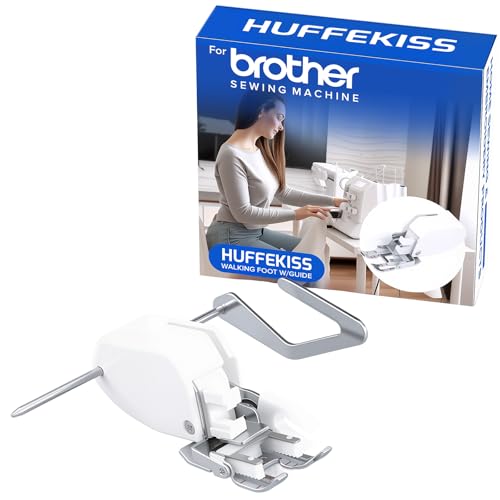
This walking foot from HUFFEKISS targets Brother machines but is designed for universal compatibility with select Singer or Janome low-shank machines. It features a 1/4-inch guide for precise quilting and sewing, along with a free-motion quilting capability. The design aims to stabilize multiple fabric layers, making it a practical accessory for quilters and professionals who need clean, even feeds on dense fabrics like denim or leather while keeping a consistent seam allowance.
6500RPM Industrial Sewing Machine (Leather Upholstery)

Powered by a 550W copper motor, this model reaches speeds up to 6500 rpm, enabling rapid production cycles. It provides a robust 3500 stitches per minute sewing speed and adjustable needle length (0–0.2 in), suitable for leather upholstery and heavy-duty fabric tasks. The build emphasizes corrosion resistance and long service life, with a mix of iron, pig iron, and aluminum components designed to withstand challenging sewing environments and frequent use in tailoring or upholstery work.
Buying Guide: Key Purchase Considerations
Selecting the right industrial walking foot machine involves weighing several factors that affect performance, maintenance, and total cost of ownership. The following considerations help compare different models and tailor choices to specific workflows.
- Feeding mechanism and fabric versatility: Triple feed or compound feed ensures reliable feeding on multiple layers. Assess whether you work with leather, denim, vinyl, or thick fabrics, and choose a machine with an appropriate walking motion and lift.
- Motor power and speed: The motor’s horsepower or wattage, plus maximum stitch rate, affects productivity. High-speed models must also maintain stitch quality without overheating.
- Stitch length and tension control: Longer stitch options can save time on heavy seams, while precise tension control prevents puckering on multi-layer projects.
- Work surface and dimensions: Table size and machine footprint matter for workshop layout and ergonomics. Larger footprints may be better for production rooms, while compact designs suit smaller studios.
- Durability and materials: Iron frames, reinforced components, and corrosion-resistant finishes extend life in professional settings. Look for models with robust bobbin systems and accessible maintenance.
- Accessibility of parts and service: Availability of replacement parts and local service support reduces downtime. Consider brands with broad dealer networks and strong after-sales service.
- Compatibility and accessories: Some items are designed for specific brands or low-shank systems. Verify compatibility with your current machines and whether walking feet, guides, or free-motion assists are included or sold separately.
- Budget and total cost of ownership: Initial price is important, but evaluate long-term costs such as needle types, bobbins, thread, oiling intervals, and potential maintenance contracts.
- Learning curve and setup: Some models offer easier presser foot adjustments and intuitive threading paths. Training or support resources can shorten the ramp-up period.
In practice, the right selection depends on your typical projects, whether you focus on leather upholstery, heavy denim, or multi-layer quilting. For high-volume production, prioritize models with high consistent speed, durable frames, and reliable feed mechanisms. For small shops, a balance of price, versatility, and ease of maintenance can guide a more flexible choice. Evaluating the available accessories and service options is also essential to sustain performance over time.
Add a Comment