Pneumatically actuated butterfly valves offer fast, reliable control for industrial piping systems. This guide highlights five robust options that balance durability, ease of maintenance, and actuation efficiency. Each product features a pneumatic or manual-pilot approach that integrates with standard ductile iron bodies and corrosion-resistant components. Use the comparison below to select the right valve for mid- to large-diameter applications, especially where consistent shutoff and quick operation are essential.
| Product | Diameter | Body Material | Rating | Notable Feature |
|---|---|---|---|---|
| 4” Butterfly Valve, Wafer | 4 inches | Ductile Iron | 200 PSI | 10 Position Handle, Square Stem |
| 6” Butterfly Valve, Wafer | 6 inches | Ductile Iron | 200 PSI | 10 Position Handle, Square Stem |
| Fulgem Pneumatic Manual Pilot Valve Toggles | 1/8″ NPT (F) Port | Zinc (Body) | – | Hand Valve, Detent, Pneumatic Mechanical Control |
| Dixon BFVL400 | 4 inches | Ductile Iron | 200 PSI | Aluminum Bronze Disc, Buna-N Liner |
4” Butterfly Valve, Wafer, 200 Psi

The 4” wafer-style butterfly valve is built with a ductile iron body rated for 200 PSI. It features a 10-position handle and a square stem, enabling precise control in mid-sized pipelines. This configuration suits water, corrosion-leaning chemicals, and general industrial services that require reliable shutoff and repeatable operation. The ductile iron construction provides a balance of strength and machinability, making maintenance straightforward in plant environments.
6” Butterfly Valve, Wafer, 200 Psi
Designed for larger pipelines, this 6” wafer butterfly valve also uses a ductile iron body with a 200 PSI rating. The 10-position handle and square stem configuration support dependable, stepwise control for flow management. The consistent seating and valve disc geometry help minimize leakage and ensure stable operation under variable process conditions, making it suitable for municipal and industrial water applications as well as general process lines.
Fulgem Pneumatic Manual Pilot Valve
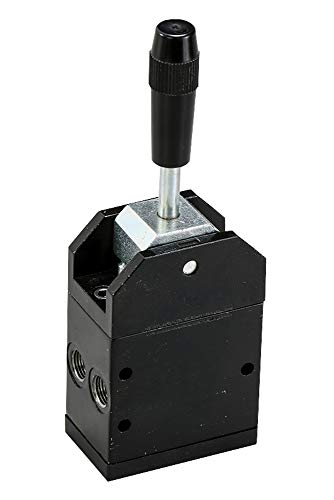
The Fulgem manual pilot valve combines simple manual control with pneumatic actuation compatibility. It is designed for easy installation and reliable sealing, with a zinc body for durability. The device is suitable for use as a pilot valve in pneumatically actuated valve systems, enabling precise hand-lever operation in conjunction with other actuation components. Its durable construction supports routine maintenance in demanding environments.
Dixon BFVL400 Ductile Iron Valve

The Dixon BFVL400 features a ductile iron body with a threaded lug style design and an aluminum bronze disc, complemented by a Buna-N liner. Rated for 200 psi, this valve offers reliable sealing and robust mechanical compatibility in threaded piping systems. The combination supports secure, leak-tight operation in process lines that demand dependable shutoff and durable wear resistance in challenging service conditions.
Buying Guide: Key Considerations For Pneumatically Actuated Butterfly Valves
- Size and connection type: Choose valve diameter (4″ or 6″ in this list) based on pipeline size and space for installation. Wafer and lug styles affect mating flanges and bolting patterns; confirm compatibility with existing piping.
- Material and lining: Ductile iron bodies provide strength and machinability, while Buna-N liners offer good chemical resistance for many water and industrial fluids. For aggressive media, verify chemical compatibility with the liner and disc material.
- Pressure rating: A 200 PSI rating supports typical municipal and light industrial applications. Ensure the service pressure matches the system’s maximum operating pressure to avoid overloading the valve.
- Actuation and control: Pneumatic actuation paired with a manual pilot option enables fast shutoff and surge control. A 10-position handle with a square stem facilitates precise position indication and stable operation.
- Maintenance and availability: Durable zinc components and standardized bearings ease maintenance. Keep spare repair kits on hand where wear is anticipated to preserve sealing performance over time.
- Installation considerations: Check for proper alignment, shaft support, and diffuser placement to avoid binding during operation. For the pilot valve option, ensure compatibility with the pneumatic control system and air supply lines.
- Operational requirements: If rapid valve cycling is needed, prioritize valves with tight seals and robust discs. Consider the impact of cycling on wear parts, especially the disc and liner combination.
- Lifecycle cost: While initial cost may vary, factor in maintenance intervals, seal replacement frequency, and part availability to estimate total cost of ownership over the valve’s life.
Add a Comment