Choosing the right 2 inch fire hose can improve response times, ensure dependable water transfer, and withstand harsh firefighting environments. This guide compares popular 2″ hoses, highlighting key features, compatibility, and intended use. Each product below is linked to its Amazon listing for easy access. The summary table at the top offers a quick reference to length, coupling type, and material so you can compare at a glance.
| Product | Length | Couplings | Material | |
|---|---|---|---|---|
| ZYfire 2″ ID x 100 FT TPU | 100 ft | M×F NST/NH Brass | TPU | 750 PSI |
| BITOTU 2″ x 50′ NPSH/NPT | 50 ft | NPSH/NPT Brass | Lay Flat | Not Specified |
| ZYfire 2″ ID x 50 FT EPDM | 50 ft | M×F NPSH Aluminum | EPDM | 750 PSI |
| ToughAid 50 FT TPU | 50 ft | NST/NH Brass | TPU | 750 PSI |
| SAFBY 2″ x 50′ NPSH/NPT | 50 ft | NPSH/NPT Brass | Lay Flat | 250 PSI (Working) / 750 PSI (Burst) |
ZYfire Fire Hose 2″ 100 Ft TPU with Brass Couplings

The ZYfire 2″ ID x 100 ft single jacket TPU hose is designed for firefighting use with M × F NST/NH brass couplings. It features a 750 PSI burst pressure, providing durability under higher water pressures. The package includes a 2″ ID x 100 ft hose with brass couplings, with length options of 25 ft, 50 ft, or 100 ft. Brass couplings offer corrosion resistance and reliable threading, suitable for persistent fieldwork.
BITOTU 2-Inch Lay Flat 50’ Fire Hose with NPSH/NPT Brass

BITOTU’s white 2″ lay-flat fire hose at 50 feet uses brass NPSH/NPT connectors and includes a gasket. It is described as highly tough and bendable, with storage care guidance to clean and fold when not in use. This hose is positioned for fire departments, industrial settings, and a range of outdoor applications, including agriculture and irrigation, with emphasis on compatible connector types before purchase.
BITOTU 2-Inch NST/NH 50’ Fire Hose
This BITOTU hose features NST/NH brass connectors with a gasket. It shares broad utility across firefighting, industrial operations, and agricultural contexts, and highlights compatibility checks before purchase to ensure the correct thread type for a secure fit during rapid deployment.
ZYfire 2″ ID x 50 FT EPDM Fire Hose
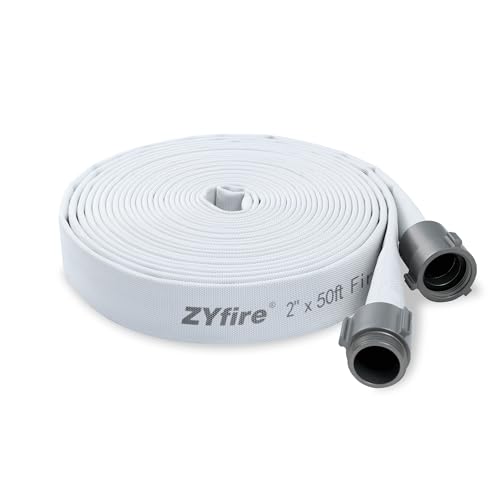
ZYfire’s 50-foot EPDM hose uses NPSH aluminum couplings, offering lightweight durability and 750 PSI burst pressure. The hose length options include 50 ft and 100 ft, with the aluminum fittings intended to reduce weight while maintaining strength. It is presented for firefighting and related activities where light weight and good water flow matter.
ToughAid 50 Ft TPU Fire Hose

Fire hose from ToughAid features a 50-foot length with 2″ ID and NST/NH brass interface. The hose uses a polyurethane (PU) lining with TPU, plus a nylon braided layer to enhance abrasion resistance and flexibility. It is marketed for rapid deployment in home, store, factory, and agricultural settings, with emphasis on bendability and smooth water flow.
SAFBY 2-Inch Lay Flat Fire Hose

SAFBY’s 2″ lay-flat fire hose at 50 feet uses NPSH/NPT brass couplings and is designed for industrial fire suppression, water transfer, and wildfire control. It notes a working pressure of 250 PSI and a burst rating of 750 PSI, offering a balance between safety margins and practical use in varied environments. Suitable for facilities and outdoor settings where robust water transfer is needed.
Buying Guide: Key Considerations When Selecting a 2 Inch Fire Hose
- Coupling compatibility: Ensure the hose ends match the existing equipment (NST/NH, NPSH, or NPT) to avoid leaks or mismatches during deployment.
- Material and lining: TPU provides flexibility and abrasion resistance; EPDM offers chemical resistance and durability; always check the internal lining for smooth water flow and reduced buildup.
- Length and portability: Shorter hoses are easier to deploy rapidly, while longer lengths enable distant placement. Consider weight and maneuverability for field use.
- Burst and working pressure: Higher burst pressure indicates stronger construction. Compare with the required operating pressure for firefighting or irrigation tasks.
- Application context: Industrial, agricultural, and firefighting contexts may demand different features like lay-flat construction, backwash use, or compatibility with pumps and hydrants.
- Storage and care: Roll or fold hoses properly after use to extend life, inspect brass or aluminum fittings for corrosion, and clean before storage to prevent mildew.
- Maintenance and replacement: Look for hoses with readily available replacement parts, such as fittings and gaskets, to maintain performance over time.
Across the selected options, the focus remains on reliable water delivery, durable construction, and compatible fittings for American firefighting and industrial contexts. When choosing, prioritize the coupling standard used by your equipment and the typical deployment scenarios to ensure a rapid, safe response in emergencies.
Add a Comment