When selecting nickel alloy welding rods, the goal is to achieve strong, crack-resistant welds on cast iron and steel joints. This guide highlights five top options ideal for professionals and maintenance technicians working with gray iron, ductile iron, and related alloys. The chosen rods offer solid current-carrying capacity, good machinability of weld metal, and compatibility with preheating where appropriate. Best buyers are metal shop pros, fabricators, and maintenance teams who need reliable fill and bonding on cast metals without excessive cracking.
| Product | Brand | Key Benefit | Best For |
|---|---|---|---|
| ENi-CI 99-Percent Nickel Cast Welding Electrodes (12″ x 3/32″) | Fox Alloy | Pure nickel weld metal; soft and machinable | Casting repairs and low-temp work on gray/dull cast irons |
| ENiFe-CI 55% Nickel Cast Iron Welding Rods (12″ x 3/32″) | Fox Alloy | Higher strength; better resistance to solidification cracking | Cast iron-to-steel joints; higher current capacity |
| ENi-CI 15pcs 99% Nickel Cast Welding Electrodes (12″ x 3/32″) | Fox Alloy | Premium pure nickel for easy machinability | General cast iron repair with low preheat |
| ENiFe-CI Nickel-Iron Welding Rods 12″ x 3/32″ (15 Pcs) | Fox Alloy | Strong weld metal; crack resistance | Cast iron or cast iron-to-steel bonding |
| ENiFe-CI Nickel-Iron Cast Iron Welding Rods 14″ x 1/8″ (10 Pcs) | Fox Alloy | High-strength, crack-resistant alloy | Heavy-duty gray/nodular iron repairs |
ENi-CI 99-Percent Nickel Cast Welding Electrodes (12″, 3/32″)

The ENi-CI rods are designed to weld normal grades of cast irons with a pure nickel weld metal that remains soft and machinable. They conform to AWS A5.15 ENi-CI and EN ISO 1071 standards, enabling reliable, repeatable welds. This option is best for fabricators who need easy post-weld machining and minimal heat-related distortion on gray and ductile cast irons.
Who it’s best for: shops performing routine cast-iron repair with low to moderate preheat, requiring a ductile-weld nickel deposit. Limitation: weld metal softness may be less suited for very high-temperature service or aggressive thermal cycling.
ENiFe-CI 55% Nickel Cast Iron Welding Rods (12″, 3/32″)

These ENiFe-CI electrodes use a nickel-iron alloy, offering stronger welds and better resistance to solidification cracking than pure nickel electrodes. They support cast-iron-to-steel joints and have good current-carrying capacity, making them suitable for more demanding repairs where heat control is essential. The standard aligns with AWS A5.15 and EN ISO 1071, ensuring dependable performance.
Who it’s best for: technicians tackling cast-iron joints that require higher strength and cracking resistance. Limitation: the nickel-iron blend may require careful amperage control to optimize deposition.
ENi-CI 15pcs 99-Percent Nickel Cast Welding Electrodes (12″ x 3/32″)
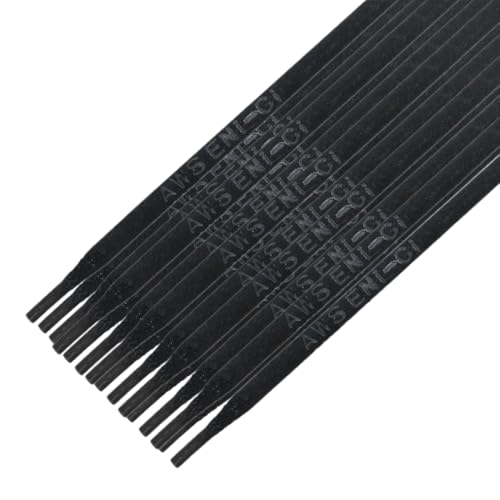
This premium set provides ready-to-use pure nickel welding rods with 12″ length and 3/32″ diameter. The weld metal remains soft and machinable, suitable for precise finishing on cast irons. It supports cold or low-temperature preheat deposition, aiding control over distortion in sensitive assemblies.
Who it’s best for: shops needing a larger quantity of pure nickel electrodes for consistent, machinable welds on cast iron. Limitation: pure nickel can be more costly than nickel-iron blends and may require specific preheat planning.
ENiFe-CI Nickel-Iron Welding Rods 12″ x 3/32″ (15 Pcs)

This nickel-iron alloy line provides excellent current-carrying capacity and a stronger weld metal with higher resistance to solidification cracking than pure nickel electrodes. It’s designed for cast iron welding and cast iron-to-steel joining, with standards compliance for reliable results in professional settings.
Who it’s best for: users requiring robust performance for cast iron repairs and steel joints. Limitation: welding dynamics may differ from pure nickel rods, demanding careful heat and amperage control during initial runs.
ENiFe-CI Nickel-Iron Cast Iron Welding Rods (14″ x 1/8″)

These 14″ long, 1/8″ diameter ENiFe-CI rods are designed for high-strength, crack-resistant welds on gray and nodular cast iron. They comply with AWS A5.15, EN ISO 1071, and GB/T 10044 standards for stable, reliable performance. The alloy supports heavy-duty repairs and cast-iron-to-steel joinery with good deposition.
Who it’s best for: fabrication shops and maintenance crews performing demanding cast-iron repairs or joining cast iron to steel. Caution: longer rods require consistent feed and technique to maintain uniform deposition across long beads.
Buying Guide
- Material compatibility: Choose pure nickel when machinability of the weld metal is a priority; choose nickel-iron blends for higher strength and cracking resistance in cast iron work.
- Welding context: For gray iron repairs with low preheat, consider ENi-CI options. For joints to steel or thicker sections, ENiFe-CI variants may provide better performance.
- Preheating guidance: Some rods perform better with cold or low-temperature preheat; check your base material and avoid excessive heat to reduce cracking risk.
- Deposition and finish: If post-weld machining is essential, prioritize rods advertised as machinable weld metal.
- Standards and compatibility: Select electrodes that conform to AWS A5.15, EN ISO 1071, and GB/T10044 for predictable results across projects and suppliers.
Frequently Asked Questions
- What is “nickel-iron” welding rod used for?
– It combines nickel with iron to increase strength and crack resistance when welding cast iron and joining cast iron to steel. - Can I use pure nickel electrodes on all cast irons?
– Pure nickel electrodes work well for soft, machinable welds but may require careful heat control on thicker sections. - Are there safety considerations with nickel-based rods?
– Follow standard welding safety practices; ensure proper ventilation and use personal protective equipment. - Which rod is best for cast iron-to-steel joints?
– ENiFe-CI nickel-iron rods generally provide stronger joints and better resistance to cracking in cast iron-to-steel welds. - Is preheating necessary for these rods?
– Preheating is situational; some rods are designed for cold deposition, while others benefit from moderate preheating to reduce cracking risk.
Add a Comment