Facing heat, fumes, or stale air in warehouses, factories, or commercial kitchens? The right aluminum industrial roof exhaust fan maximizes airflow, reduces heat buildup, and keeps working spaces comfortable. The top picks below are best for specific needs like high airflow, weather resistance, and low maintenance. This guide targets buyers seeking durable, aluminum-bodied roof exhaust fans for harsh outdoor environments and demanding ventilation tasks.
Overview of top picks
| Product | CFM | Key Strength | Best For | Limitations |
|---|---|---|---|---|
| CXRCY 1400 CFM Upblast | 1400 | All-Copper motor, energy-efficient | Factories and warehouses needing strong air turnover | Medium overall size |
| Hakazeni Roof Exhaust Fan | 1500 | Weatherproof aluminum alloy, low noise | Attics, garages, and mixed-use spaces | Mid-range airflow per unit |
| VEVOR Roof Exhaust Fan (4000 CFM) | 4000 | High airflow, heavy-duty aluminum | Large spaces needing rapid ventilation | Higher price point |
| PrecisionAuto 1400CFM | 1400 | Direct drive, weather-resistant | Restaurants and warehouses requiring reliable, quiet operation | Standard base size |
| PeakPursuit 1400 CFM | 1400 | Direct drive, weather-resistant | Restaurants and industrial facilities | Basic housing design |
CXRCY 1400 CFM Upblast Roof Exhaust Fan

The CXRCY model offers 1400 CFM with a 2700 RPM all-copper motor and a 260W draw, delivering strong ventilation with energy efficiency. The spun-aluminum housing and waterproof design provide weather resistance for outdoor roof installations. Best for: medium-to-large industrial spaces requiring reliable, continuous air movement. Limitations: 19.69″ x 19.88″ footprint may require mounting space planning.
Hakazeni Roof Exhaust Fan, 1500 CFM

Hakazeni provides 1500 CFM with a thick aluminum alloy frame designed for weather resistance and long life. The upblast design helps prevent water backflow, and the motor operates with relatively low noise. Best for: roof installations in attics, garages, kitchens, and warehouses where weather exposure is a concern. Limitations: slightly higher price for aluminum durability and weatherproofing.
VEVOR Roof Exhaust Fan, 4000 CFM

The VEVOR 4000 CFM unit delivers very high airflow for expansive spaces, built with a heavy-duty aluminum base and housing. It uses a powerful motor and two-speed or adjustable settings to tailor ventilation. Best for: large warehouses, loading docks, and open-plan industrial areas needing rapid air exchange. Limitation: higher initial investment and more complex installation considerations due to size.
PrecisionAuto 1400CFM Industrial Upblast Fan
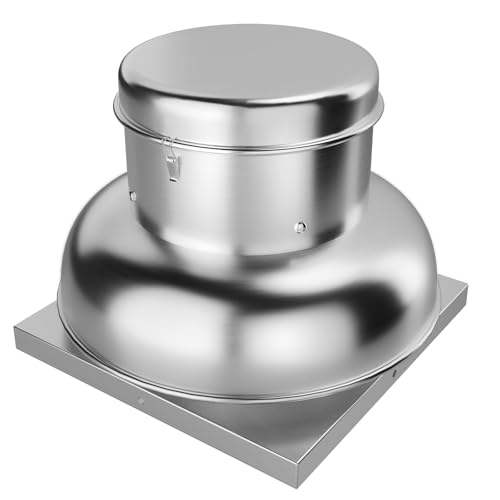
PrecisionAuto offers 1400 CFM with a direct-drive motor designed for durability in restaurant and warehouse environments. It is noted for quiet operation and strong airflow, making it suitable for spaces where noise control matters. Best for: commercial kitchens and loading areas where consistent venting is needed. Limitation: direct-drive motors may need attention for maintenance in very dusty environments.
FICBXRA Roof Exhaust Fan

FICBXRA presents a high-speed centrifugal downblast exhaust option with 800 CFM and a 110V motor. Its aluminum construction is suited for general ventilation tasks around kitchens or workshops, but it is not designed for grease-heavy exhaust. Best for: smaller installations or retrofit projects needing a simpler, lightweight solution. Limitation: not intended for grease-laden exhaust environments.
PeakPursuit 1400 CFM Upblast Roof Fan

PeakPursuit provides 1400 CFM with a direct-drive design and weather-resistant spun aluminum housing. It aims to balance airflow with quieter operation for restaurants and industrial spaces. Best for: spaces needing consistent ventilation without excessive noise. Limitation: the housing design is basic compared to premium weatherproof builds.
Buying Guide
What to consider when choosing an aluminum industrial roof exhaust fan
- Airflow needs (CFM): Match the space size and heat load to the CFM rating. Higher CFM is better for large or heat-heavy areas.
- Motor type: Direct-drive motors offer fewer moving parts and lower maintenance but may require precise installation. Copper motors can provide durability and efficiency.
- Material and build: Aluminum housings resist corrosion and weather exposure, ideal for outdoor roof installations. All-copper motors can improve longevity but may add cost.
- Noise tolerance: Some models emphasize quiet operation—important in mixed-use spaces or food-service environments.
- Weather resistance: Look for waterproof housings, seals, and upblast designs to prevent water backflow and debris intrusion.
- Footprint and mounting: Ensure the unit fits existing roof openings and has compatible base dimensions for mounting.
- Energy efficiency: Consider wattage and RPM to balance airflow with power draw and long-term operating costs.
- Maintenance needs: Fewer moving parts and accessible components simplify service in industrial settings.
Frequently Asked Questions
What is the difference between upblast and downblast exhaust fans?
Upblast fans push air upward and out through the roof, reducing backflow risk and exposure to interior contaminants. Downblast fans push air downward, often used for makeup-air applications but can introduce dust and grease into ceilings.
Why choose aluminum for a roof exhaust fan?
Aluminum is lightweight, corrosion-resistant, and durable in outdoor conditions, making it well-suited for rooftop installations exposed to rain, wind, and UV exposure.
What CFM should I aim for in a factory environment?
For large spaces, aim for high CFM (thousands) to rapidly exchange air. For smaller rooms, 500–1500 CFM with appropriate ducting can suffice depending on heat load and occupancy.
Are a higher RPM and larger motor always better?
Not always. Higher RPM can increase noise and power use without proportional gains if ducting and intake are limiting airflow. Balance with duct design and noise considerations.
What maintenance should I plan for an aluminum roof fan?
Regularly inspect for debris, lubricate moving parts if applicable, check seals and weatherproofing, and verify mounting hardware remains tight after storms or high winds.
Add a Comment