Pneumatic switches and valves are essential for directing compressed air in automation, tooling, and hobby builds. This guide highlights five reliable options, helping buyers choose by function, port size, and operation mode. Tailored for different users—from hobbyists to professionals—the selections cover manual, rotary, and solenoid types. The top picks emphasize clear control, durable construction, and compatibility with standard air fittings.
Summary of chosen products
- TAILONZ PNEUMATIC 4H210-08 — Best for hand-lever control on 1/4″ systems
- Baomain HL-2501-V — Best for precise 5-way, 2-position manual control
- TAILONZ PNEUMATIC HV-02 — Best for rotary hand valve with 1/4″ ports
- TAILONZ PNEUMATIC 4V210-08 — Best for 5-way solenoid operation
- Baomain HL-2301-V — Best for compact 3-port, 2-position knob switch
TAILONZ 5 Way Hand Lever Valve 1/4″ NPT

Model: 5 Way 2 Position Hand Pull Valve. Port size: 1/4″NPT. Working medium: air. Working pressure range: 25 psi to 116 psi. This manual control valve is designed for simple actuation in double-acting cylinders. Best for projects needing quick, physical direction changes without electricity. Choose this if you primarily operate with a hand pull mechanism in compact air systems.
hobbyists, small workshop setups, and educational kits that require straightforward manual direction control.
Limitation: The manual pull action may be slower for high-cycle automation and does not include electrical actuation.
Baomain HL-2501-V 5 Way 2 Position Manual Valve

Features: 5-way, 2-position control; PT 1/8″ ports; 16mm² effective area for better flow; robust steel toggle lever; designed for 22–116 PSI. The HL-2501-V is a precise manual toggle valve for pneumatic logic in double-acting actuators. Best for reliability in factory or lab settings where precise manual routing is needed.
Best for: industrial or heavy-duty applications requiring a durable manual override with consistent flow.
Limitation: PT ports are 1/8″; wiring or piping changes may be needed for larger systems.
TAILONZ HV-02 Rotary Lever Hand Valve

Model: HV-02, 1/4″ NPT ports for air inlet and outlet, 1/4″ NPT air exhaust. Operating pressure range: 25–116 psi. This rotary lever valve provides smooth leverage for quick directional changes. It suits applications needing continuous manual control with a lever action and three positions for routing air flow.
Best for: equipment setups that benefit from a rotary control handle rather than a pull lever.
Limitation: Rotary design may be less intuitive for very tight spaces; ensure clearance for lever movement.
TAILONZ 4V210-08 Solenoid Valve, 5-Way

Product: 2-Position 5-Way Solenoid Valve with Pilot-Operated, 12V DC coil (outlet wire). Working pressure: 25–116 psi. Operation: When coil is powered off, the valve stays open; when powered on, it closes. This configuration is suitable for automated lines or devices requiring electrical actuation for air routing.
Best for: systems needing remote or automated air control without mechanical actuation.
Limitation: Solenoid valves require a compatible control signal and power supply; ensure electrical integration is feasible in your setup.
Baomain HL-2301-V Knob Switch Valve
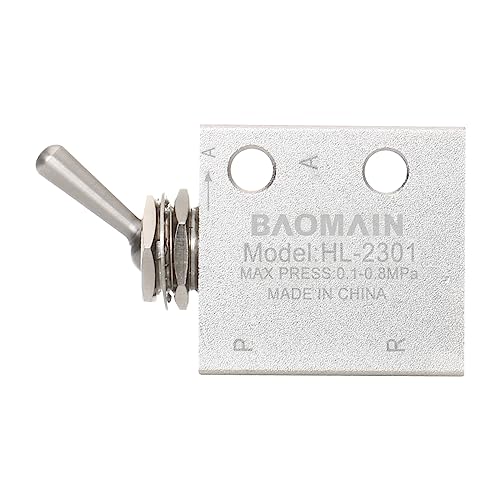
Features: Knob Switch Valve, 3-port, 2-position. Working pressure: 1.5–8 Kgf/cm². Thread diameter: 12mm; port type: 2-position 3-way; inlet/outlet screw diameter: 8.5mm. This valve offers manual knob-based selection for compact air routing in limited spaces.
Best for: compact machines or tool stations where space is at a premium and manual selection must be straightforward.
Limitation: Smaller ports limit flow in higher-demand systems; consider system requirements before selecting.
Sparkleiot Pneumatic Switches Pack

Product: Pack of 4 pneumatic valve switches intended for building block projects. Useful for educational builds and demonstration setups that require multiple switch inputs. Best for hobbyists and model builders seeking modular components.
Best for: building block projects and educational kits where multiple independent switches are needed.
Limitation: Pack is designed for demonstration and light-duty use; verify compatibility with your system’s air supply and connectors.
Wadoy 4-Way Air Compressor Pressure Switch
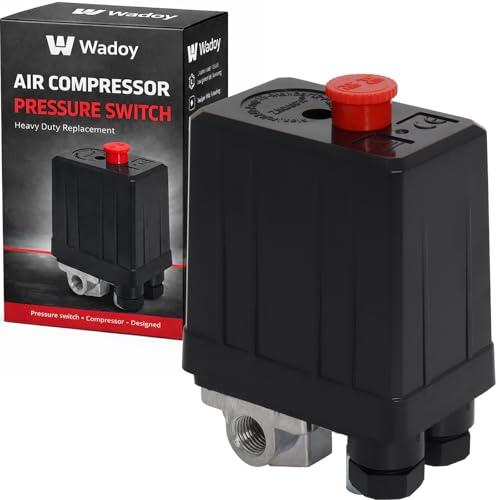
Model: Upgraded 4-Way Air Compressor Pressure Switch for 90–120 PSI. This device controls the compressor by turning on/off to maintain the desired pressure range. Suitable for replacing older pressure switches in standard air systems.
Best for: keeping air compressors within target pressure ranges in professional or workshop environments.
Limitation: Non-original parts may vary in fit; confirm compatibility with your compressor model before installation.
VIILOCK Foot Pedal Valve Kit

Product: FV320, 3-way, 2-position foot pedal valve. 1/4″ NPT ports. This kit provides hands-free control for workflows requiring foot operation. The die-cast body and reinforced stainless steel spring support durability in high-use environments.
Best for: machining, sewing, or packaging lines where hands-free actuation improves efficiency.
Limitation: Foot pedals may require space and alignment; plan installation location to ensure accurate actuation.
Buying Guide
Key considerations when selecting a pneumatic switch or valve include port size, actuation method, and pressure range. For manual options, consider whether a lever, knob, or foot pedal best fits your workspace and operator workflow. If automation is required, ensure the solenoid valve is compatible with your control system and power supply. For multi-way configurations, confirm the number of ports and the type (3-way, 4-way, 5-way) aligns with your actuator needs. Material construction and port standards affect durability in industrial environments; steel or reinforced bodies offer robustness, while plastic bodies may be lighter and cost-effective for hobby projects.
Compare the following practical questions to guide your choice:
- Do I need electrical actuation or purely manual control?
- What port size and thread type does my system require?
- What is the desired number of flow paths (3-way, 4-way, 5-way)?
- What is the maximum working pressure of my air supply?
- Is compact space a priority, or do I need a full-size industrial valve?
Pairing a valve with appropriate fittings, tubing, and mount provisions is essential for reliable performance. For general use, prioritize valves with proven seals and corrosion-resistant bodies to minimize leaks and maintenance.
FAQ
- What is the difference between 3-way and 5-way pneumatic valves?
3-way valves control flow to one actuator with a common exhaust, while 5-way valves provide more routing options and can control double-acting cylinders with two outputs and separate exhausts. - When should I choose a manual valve over a solenoid valve?
Choose manual when you need simple, no-power actuation or fail-safe operation; choose solenoid for automated or remotely controlled systems. - What port sizes are common in hobby pneumatic setups?
1/4″ NPT is a standard size for many hobby and small-shop projects, with 1/8″ NPT and 3/8″ NPT also common in modular kits. - Are rotary lever valves better than push-pull valves?
Rotary levers offer smooth, continuous control; push-pull valves provide direct, quick action. Your choice depends on space and preferred control style. - Can I mix different brands of pneumatic valves in one system?
Yes, as long as the port sizes, thread types, and pressure ratings match, but ensure compatibility and leak-free connections.
Add a Comment