Inflatable sewer pipe plugs are essential tools for testing, sealing, and temporarily blocking pipes during maintenance. This guide highlights five reliable options, covering varying diameters, materials, and configurations to fit common residential and commercial applications. Each product is selected for ease of use, durability, and dependable sealing under typical test pressures. Read on to compare key features and find the right inflatable plug for your next piping project.
| Product | Diameter Range | Key Use | Notable Feature |
|---|---|---|---|
| Safe-T-Seal TP123 Pneumatic Hydraulic Test Plug | 1.25″ to 3″ | Pipe testing and temporary sealing | Air or water inflation with over-inflation relief |
| Inflatable Pipe Test Plug with Extension Hose (2″–4″) | 2″ (pipe); extensions up to 4″ | Comprehensive inspection and sealing | Includes extension hose, steel chain, anti-falling ring |
| Inflatable Pipe Plug Balloon for Sewer Testing (4″) | 4″ | Sealing, testing, water shut-off | Comes with manual inflator; versatile pipe compatibility |
| Inflatable Pipe Plug Balloon Plug (2″) | 2″ | Pipe testing and blocking | Clear working pressure spec and solid rubber body |
| VEEVIIY 4″ Inflatable Pipe Plug | 4″ | Pressure testing, blocking, leak inspection | 39.37″ hose and chain for deep or hard-to-reach pipes |
Safe-T-Seal TP123 Pneumatic Test Plug

The Safe-T-Seal TP123 unit supports pipe testing across a 1.25 to 3 inch diameter range. It inflates using air or water and includes a pressure relief valve that releases excess air to prevent over-inflation. This feature enhances safety and reduces the risk of pipe damage during setup. The design aims for consistent sealing while accommodating various test environments, making it a pragmatic choice for plumbers and HVAC professionals performing line tests.
Inflatable Pipe Test Plug With Extension Hose

This versatile kit includes an inflatable pipe plug, a 19.7-inch extension hose, steel chain, and anti-falling steel ring. Constructed with a thick natural rubber body, it is designed for 2-inch pipes with strong expansion capabilities. It uses a pure copper valve for reliable sealing and supports manual pumping up to 2.18 PSI. The kit’s modular setup makes it suitable for comprehensive pipeline inspection and maintenance tasks, including sealing and testing operations in tight spaces.
Inflatable Pipe Plug Balloon For Sewer Testing (4″)

This 4-inch inflatable pipe plug is designed for sealing and testing sewer pipes and works with a general purpose air pump. It includes a manual inflation approach and is constructed from natural rubber with good expansion and memory properties. The plug is compatible with various pipe materials, including PE, HDPE, PVC, metal, and cement pipes. It enables effective water-tight tests and temporary blockages during maintenance projects, providing a straightforward option for sewer line work.
ROLING 2 Inch Inflatable Pipe Plug

The 2-inch plug from ROLING features a maximum working pressure around 2.9 PSI (20 kPa, 0.02 MPa). It expands by about 50% under this pressure, offering a robust seal for small-diameter pipes. After-sales support emphasizes a quick replacement process for any quality concerns. This option is suitable for targeted leak tests or temporary block-offs in compact piping configurations where space is limited.
VEEVIIY 4 Inch Inflatable Pipe Plug

VEEVIIY’s 4-inch inflatable pipe plug uses natural rubber for strong expandability and memory, supporting pressure testing, temporary blocking, and leak inspection. The package includes a 39.37-inch hose and chain, facilitating inflation and removal from deeper segments of a pipe. This configuration is particularly useful for longer runs where reach and control during inflation are important.
Cherne 4″ Rubber Test-Ball Pipe Plug

Cherne’s 4″ rubber test-ball plug is designed to test DWV systems at pressures up to 13 PSI and 30 feet of head. The natural rubber body offers excellent expansion, enabling a reliable seal across typical piping configurations. This option is well-suited for high-pressure sewer testing scenarios where a robust, proven plug is required.
Inflatable Pipe Plug Balloon Plug (4 Inch)

This 4-inch inflatable plug is designed for sealing and testing sewer pipes. It uses a reliable rubber compound and supports inflation up to 2.9 PSI (20 kPa). The product emphasizes durability and compatibility with common pipe materials, offering a practical solution for blocking and testing during maintenance projects.
Generic 2 Inch Inflatable Pipe Plug Balloon
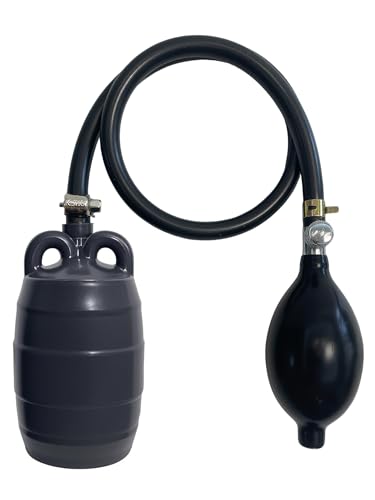
This generic 2-inch inflatable plug includes a manual inflator and uses natural rubber with good expansion and memory characteristics. It is suitable for sealing and testing sewer pipes and is compatible with PE, HDPE, PVC, metal, and cement pipes. The product focuses on straightforward operation and dependable sealing for smaller-diameter runs.
Buying Guide
Key purchase considerations:
- Diameter range: Confirm the plug fits your pipe size. Some models expand to a range (e.g., 1.25″–3″), while others target a fixed size (e.g., 4″ or 2″).
- Inflation method: Decide between air, water, or dual inflation. Air is common for quick setup; water can provide heavier seal in certain conditions.
- Maximum working pressure: Check PSI ratings to ensure compatibility with your test requirements and pipe materials.
- Material and memory: Natural rubber with good memory offers reliable sealing and easy removal; synthetic rubbers may vary in elongation and resilience.
- Accessories: Extension hoses, chains, rings, and valves improve usability, especially in deep or obstructed pipes.
- Durability and replacement support: For frequent use, select brands with reliable after-sales options or readily available replacements.
- Pipe compatibility: Ensure the plug is suitable for the pipe materials you work with (PE, HDPE, PVC, metal, cement).
- Portability and ease of installation: Look for kits with user-friendly features like double pull rings, clear inflation instructions, and quick-release valves.
When selecting a plug, balance diameter range with the required test pressure, the ease of handling in the field, and the availability of supportive accessories. For complex or long sewer runs, consider models that include extensions and robust securing features to ensure a safe, effective seal during testing and maintenance operations.
Add a Comment