Answering the buyer’s need for clean, efficient dust control, this guide highlights five industrial sawdust collection systems that fit mid-size to professional shop work. Each option targets different workshop layouts and project types, from portable setups to wall-mounted solutions. The selections emphasize strong suction, large collection bags, and fine filtration to reduce airborne dust. Best for: woodworkers seeking high airflow, extended run times between emptying, or compact, wall-mounted installations.
Summary table of chosen products:
| Product | Best For | Capacity | Filtration |
|---|---|---|---|
| VEVOR Dust Collector, 1550 CFM | Large workshops needing high airflow | Two 42-gallon bags | 2.5-micron |
| Industrial 1500W Dust Collection System (ExploreHorizon) | Busy professional/home shops | 50-gallon bag | Fine filtration unspecified micro rating |
| VEVOR Wall Mount Dust Collector, 560 CFM | Small to medium spaces with wall space | 21-gallon bag | 2.5-micron |
| VEVOR Dust Collector, 1200 CFM | Portable single-machine cleanup | 42-gallon bag | 3-micron canister filter |
| Milescraft 1500 DustCutter | Table saw and cabinet setups | Integrated funnel & bag | Not specified |
VEVOR Dust Collector, 1550 CFM

Best for large woodshops needing strong airflow, this VEVOR model delivers 1550 CFM with a 2.5-micron filter. It uses dual 42-gallon bags to maximize dust capacity, allowing longer operation between bag changes. The 3.0HP motor supports medium to heavy woodworking tasks, making it a solid choice for professional shops handling chips, sawdust, and particulate matter in busy environments.
Who it’s best for: shops with frequent, high-volume dust production and space for a larger, portable unit. Why selected: combination of high airflow, substantial dust storage, and fine filtration supports efficient, cleaner work environments. Caution: ensure your electrical circuit can support 3400 RPM operation and plan for bag replacement logistics during long sessions.
Industrial 1500W Dust Collection System (ExploreHorizon)
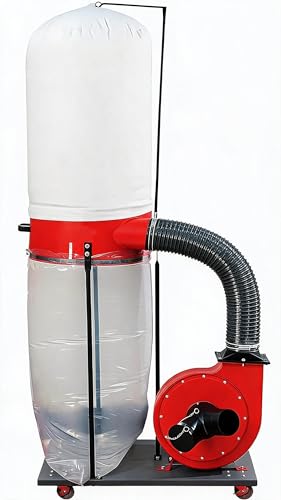
Best for busy professionals or ambitious home shops, this 2HP system emphasizes strong suction and a large 50-gallon bag. It is designed for woodworking tasks like cutting, sanding, and carving, helping keep air and surfaces clean. It’s a practical choice for larger projects where frequent dust removal would interrupt workflow.
Who it’s best for: studios needing a balance of power and a large collection bag for extended runs. Why selected: high-capacity bag reduces breaks and supports steady productivity. Caution: the model specification notes high power demand; verify your shop’s electrical setup and space for airflow management.
VEVOR Wall Mount Dust Collector, 560 CFM

Best for space-constrained shops, this wall-mount option delivers 560 CFM with 2.5-micron filtration. The 21-gallon bag offers a practical balance between capacity and footprint. It’s effective for mid-sized operations that want to keep dust control close to the work zones without dedicating floor space.
Who it’s best for: makers with limited floor area who still need reliable filtration near sanding and milling stations. Why selected: wall mounting saves floor space while maintaining strong suction and filter quality. Caution: 560 CFM may be insufficient for very large, chip-heavy tasks across multiple machines simultaneously.
VEVOR Dust Collector, 1200 CFM

Best for portable, high-efficiency cleanup of a single workstation, this 1200 CFM unit combines robust suction with a 42-gallon bag and a 3-micron canister filter. It’s a versatile choice for shops that focus dust control around one or two primary machines like a table saw or planer.
Who it’s best for: users needing strong, mobile suction for targeted tasks. Why selected: the two-bag system and fine 3-micron filtration help capture both large chips and fine dust. Caution: designed for circuit protection; ensure a suitable electrical setup and safe transport around the workshop floor.
Milescraft 1500 DustCutter

Best for table saw setups and compact cabinet work, the Milescraft DustCutter combines an integrated funnel, vacuum compatibility, and a dedicated dust collection path. This system is designed to keep airflow close to the source, helping reduce airborne dust near sensitive equipment and work surfaces.
Who it’s best for: users who need a targeted, integrated solution around a single cutting station. Why selected: the design focuses on direct collection to minimize dust spread. Caution: may be less suitable for heavy-duty, multi-machine environments without additional filtration support.
Buying Guide
- Shop Size and Layout: Choose high airflow for large spaces and compact, wall-mounted units for tight workshops. Consider how many machines produce dust simultaneously.
- Dust Containment Capacity: Larger bags reduce frequent emptying; smaller bags require more maintenance but save floor space.
- Filtration Fine-Tuning: 2.5-micron filtration captures most fine sawdust; 3-micron filters offer strong performance with slightly higher airflow trade-offs. Consider air quality needs and respiratory comfort.
- Power and Circuits: High-CFM models demand robust electrical supply. Verify circuit amperage and dedicated circuits if needed to avoid tripping.
- Mobility vs. Permanence: Portable units suit dynamic spaces, while wall-mounted or fixed units maximize space and reduce clutter.
- Maintenance and Access: Easy bag removal, clear canisters, and accessible filters shorten downtime and simplify upkeep.
Frequently Asked Questions
- What is CFM and why does it matter?
CFM measures airflow; higher CFM improves dust capture and faster removal of dust from the work area, especially around larger or multiple machines. - Are 2.5-micron filters sufficient for fine dust?
They capture most fine wood dust and chips. If your shop generates very fine particles, consider models with smaller micron ratings or multiple filtration stages. - Should I buy a wall-mounted unit?
Wall-mounted units save floor space and are ideal for small to medium shops. They are best when dust generation is centralized near one or two machines. - How often will I need to replace bags?
Bag replacement frequency depends on usage. Higher throughput environments will require more frequent changes; choose larger bags if possible for longer runs. - Can these systems handle multi-machine dust simultaneously?
Some systems excel with a single source, while others support multiple stations. For busy shops, consider higher-CFM units or multiple collectors strategically placed near primary dust sources. - Do I need professional installation?
Small to mid-size setups often install with basic electrical work. For wall-mounted or high-CFM systems, professional assistance ensures proper mounting, wiring, and safety compliance.
Add a Comment