Answering the needs of buyers seeking automated liquid filling capabilities, these selections emphasize precision, scalability, and customizable packaging options. Ideal for small-batch brands, growing mid-sized operations, and facilities requiring customized bag or pouch configurations. This guide highlights five practical choices with clear reasons to buy and potential limitations to consider.
Summary table of selected products:
| Product | Best For | Key Benefit | Notes |
|---|---|---|---|
| AS-1000 Automatic Liquid Pouch Filling Sealing Machine 50-500ml (110V) | Small to mid-sized liquid brands | High-precision filling and dual sealing options | 110V model; suitable for side or back seal setups |
| AS-1000 Automatic Liquid Pouch Filling Sealing Machine 50-500ml (220V) | European/Asia-based operations or 220V facilities | Same precision with 220V compatibility | Alternative power option |
| Automatic Liquid Filling Packing Machine For Water, Juice, etc. (Back Seal) | Custom packaging paths and varied bag sizes | Flexible film types and bag lengths | Back-seal capability with broad fill range |
| VEVOR Automatic Particle Packaging Machine (1-100 g) | Powdery or granular contents in small bags | Integrated weighing and sealing for accuracy | 3-side seal option; separate film rolls needed |
| Moonshan 4-Nozzle Automatic Liquid Filling Machine Line | Small businesses needing a desktop line | Independent nozzle control for multiple bottle sizes | Infrared sensing and belt conveyor; desktop style |
AS-1000 Automatic Liquid Pouch Filling Sealing Machine 50-500ml (110V)

The AS-1000 110V model delivers high-precision filling with a one-percent tolerance and an output of 1100-1300 bags per hour. The adjustable filling range spans 50 ml to 500 ml, making it suitable for water, milk, juice, and other liquids. Best for small to mid-sized liquid products that require consistent bag weights and stable operation. A key limitation is that performance is tied to voltage compatibility; verify electrical requirements before purchase.
Who it’s best for: Startups and growing brands needing reliable, high-output pouch filling with customizable bag sizes and potential color-printed films. Choose this if you want tight fill accuracy and two sealing options to fit different bag styles.
Why selected: It combines precise filling, high throughput, and flexible sealing options in a compact footprint, making it a versatile core production unit for liquid packaging lines.
One caution: Ensure your facility baseline electrical setup matches 110V operation and that you have compatible seal configurations for your chosen bags.
AS-1000 Automatic Liquid Pouch Filling Sealing Machine 50-500ml (220V)
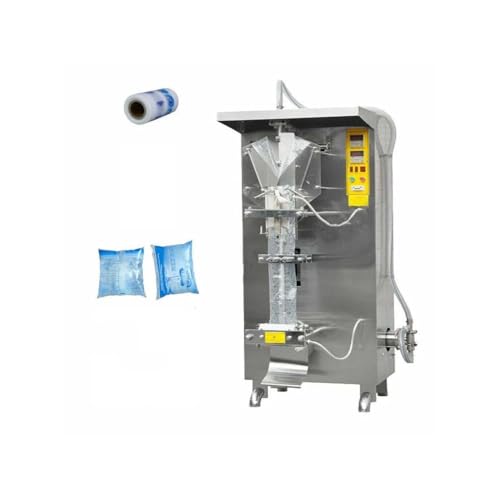
This 220V variant mirrors the 110V model’s precision and hourly capacity, enabling stable, continuous operation for mass liquid packaging. It is best for facilities already wired for 220V or those upgrading from lower-voltage equipment. The same customization options apply, including bag size adjustments and printed film. A practical caveat is the need to align the control system with regional electrical standards and plug types.
Who it’s best for: Established facilities or multinational teams with 220V infrastructure seeking identical performance to the 110V version but without voltage limitations.
Why selected: Keeps the high-precision and throughput that liquid pouch lines require while accommodating different electrical environments.
One caution: Confirm electrical compatibility and any regional control software differences before setup.
Automatic Liquid Filling Packing Machine For Water, Juice, Vinegar, etc. (Back Seal)

This machine supports a broad filling range (3–1000 ml) and uses multiple film types, including composite plastics and aluminum films. It offers 3-Side Seal and Back Seal configurations and supports bag lengths from 1–16 cm with customizable options. Best for brands needing flexible bag formats and wide fill ranges for liquids like water, oils, or sauces. A limitation is the broader feature set; setup may require additional customization.
Who it’s best for: Brands that experiment with bag formats and need a versatile sealing approach to suit diverse packaging lines.
Why selected: The wide fill range and film compatibility make it a strong multi-purpose option for adaptable packaging strategies.
One caution: Verify bag length and film compatibility with your target packaging line to avoid mismatches.
VEVOR Paste Liquid Filling Machine (1-100 g)

Designed for powders and pastes in small bags, this model combines automatic weighing and sealing with microcomputer control. It features a 3-side seal design and a packing speed of 10–15 bags per minute, depending on material quality and bag size. Best for precise, small-volume packaging in powdered or viscous liquid formulations. Limitation includes the need to procure film rolls separately and confirm bag width compatibility.
Who it’s best for: Small-scale operators handling powders, pastes, or viscous liquids who need precise portioning and a compact footprint.
Why selected: Its integrated weighing and sealing provide a compact, automated solution for accurate small-bag packaging.
One caution: Budget for additional film rolls and verify film-to-bag compatibility prior to purchase.

This desktop-style filling line combines a four-nozzle liquid filler with a 35-inch belt conveyor and infrared sensing for automated filling and transport. Independent control for each pump allows adapting to different bottle sizes, making it well-suited for small-batch production or laboratories testing multiple SKUs. Best for compact operation needing adjustable speeds and per-nozzle control. A potential limitation is its desktop design, which may limit overall throughput for larger lines.
Who it’s best for: Small businesses or test-focused operations introducing multiple liquid SKUs with varying bottle dimensions.
Why selected: The per-nozzle independent control supports quick changes between bottle sizes without retooling.
One caution: Ensure your workspace supports a belt conveyor layout and infrared sensor integration for reliable operation.
Buying Guide: Key Considerations for Automatic Filling Machines
What fill range do you need? Match the machine’s volume range to your product’s bottle or pouch sizes to avoid over- or under-filling. Consider whether a model supports your target liquid viscosity and any particulates.
Sealing method matters. Three-side seal, back seal, or side seal configurations affect bag compatibility and sealing strength. Choose based on your film choice and desired package aesthetics.
Power and electrical compatibility. Confirm voltage, plug type, and phase requirements to prevent installation delays or unsafe wiring.
Throughput vs. footprint. Higher output machines may require more space or integrated conveyors. Balance line speed with available production floor space and future growth plans.
Film and bag compatibility. Verify film material types, bag lengths, and widths supported by the machine. Custom printing or film finishing may require additional options.
Maintenance and parts availability. Prioritize models with accessible spare parts, service support, and straightforward cleaning procedures for liquids.
Scalability. If growth is expected, choose a model with modular options, upgrade paths, or the ability to handle broader fill ranges and bag formats.
Frequently Asked Questions
-
What should I consider when choosing fill accuracy?
Assess tolerance requirements for your product and how tight consistency impacts packaging waste and customer satisfaction. Higher precision usually means better line control but may require more setup and maintenance.
-
Are back-seal or side-seal machines better for liquids?
It depends on your film and bag design. Three-side or back seals can offer strong closures for liquids with different packaging aesthetics and flow characteristics.
-
Is a desktop filling line suitable for growth?
Desktop lines are ideal for pilots, small-batch production, or limited workspace. For expanding operations, plan for modular systems or scalable conveyors to increase capacity.
-
Do I need integrated weighing on a liquid filler?
Integrated weighing improves fill consistency, especially for variable liquid densities or hot-fill processes. It adds control complexity but reduces under/overfill risk.
Add a Comment