Answering the needs of professionals in oil, gas, and related industries, this guide highlights practical clothing options designed for protection, comfort, and safety. The top picks cater to different buyers: coveralls for full-body protection, FR shirts for layer-based flame resistance, and workwear that balances breathability with safety for long shifts. The selected products suit: site crews requiring chemical barrier gear, field workers needing flame-resistant basics, and maintenance teams seeking comfortable, durable work shirts.
Summary table of selected products:
- Andes Chemical Protection Coveralls — full-body protection with sealed seams and attached boot covers (best for chemical handling environments).
- WORKWEYA FR Lightweight Shirts — breathable, cotton FR shirts suitable for layering in hot or dusty work areas.
- BOCOMAL FR Shirts — breathable 6oz FR cotton jersey with ventilation panels for long, active days.
- Pioneer Hi Vis Self-Extinguishing FR Safety Vest — reflective, self-extinguishing vest for high-visibility needs in moderate-risk settings.
- Pocket-free, safety-focused design considerations are included in the Buying Guide, along with a practical FAQ.
Andes Chemical Protection Coveralls: Full-Body Chemical Barrier

Product overview: Andes Safety’s sealed-seam coveralls provide full-body protection with an attached hood and boot covers, built from reinforced polyethylene-coated fabric. This design emphasizes durability and a strong barrier against light chemical splashes, acids, alkalis, solvents, and agricultural chemicals. The anti-static treatment reduces ignition risk in flammable environments, making it suitable for cleanrooms, pharmaceutical settings, and controlled contamination areas.
Who it’s best for: buyers needing maximum protection during chemical handling, spill response, or hazardous material work where boot-cover integration matters. This is a strong choice for environments with chemical exposure and a demand for sealed seams to minimize leaks.
Why selected: the combination of sealed seams, attached boots, and hood delivers comprehensive protection in a single suit, simplifying donning and reducing gaps in coverage. Anti-static fabric adds an extra safety layer in sensitive spaces.
Caution: the bulkier, full-body design may reduce mobility in tight workspaces; consider sizing carefully for comfort during long shifts.
WORKWEYA FR Lightweight Shirts: Cotton FR Comfort

Product overview: A 100% cotton, 5.5 oz flame-resistant shirt designed to be breathable and skin-friendly. It meets FR standards (NFPA 2112 and CAT2) and features an arc-rated protection level suitable for arc flash and flash fire scenarios. The design offers a rounded neckline, ribbed collar and cuffs, a chest pocket, and multiple color options for easy pairing with FR outerwear.
Who it’s best for: workers who need a comfortable base layer in hot or dusty environments, with a focus on flame resistance for brief exposure risks. Ideal for crews performing routine tasks where layering is beneficial.
Why selected: this shirt provides FR protection without heavy bulk, making it a practical option for long shifts and variable climates. The visible FR labeling and pocket add practical safety cues on site.
Caution: fabric durability in heavy abrasion tasks may vary; consider combining with protective outerwear for high-scrape environments.
BOCOMAL FR Shirts: Ventilated Flame-Resistant Workwear

Product overview: This 6oz FR 100% cotton jersey shirt includes vented underarm panels made from modacrylic mesh to improve airflow. The henley-style placket and hidden pocket offer practical wearability, while the FR rating (HRC2/CAT2, arc rating 8.9 cal/cm²) aligns with NFPA 2112, NFPA 70E, and ASTM F1506 standards.
Who it’s best for: field technicians and maintenance workers who need breathable FR fabric during hot days or active tasks. The ventilation panels help regulate temperature without sacrificing safety.
Why selected: the combination of intrinsic FR protection, ventilation, and practical design elements (pocket, tagless neckline) makes it a versatile choice for moderate-risk environments.
Caution: FR compliance is contingent on proper care; follow washing instructions to preserve flame resistance over time.
Pioneer Hi Vis FR Safety Vest: Reflective FR Layer
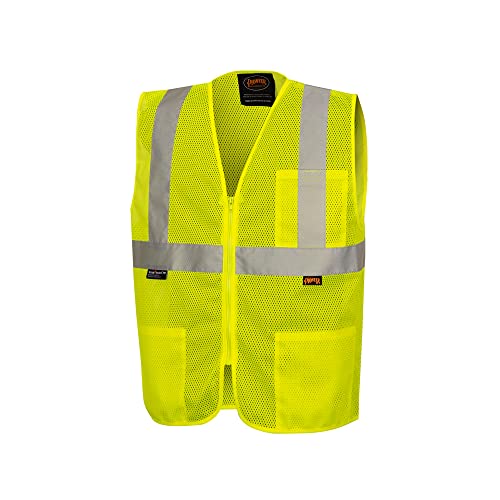
Product overview: A flame-resistant mesh safety vest with reflective tape designed for oil, gas, mining, construction, and transportation workers in moderate-risk environments. It is self-extinguishing, meeting EN ISO 14116 and ASTM D6413 standards. The vest is intended to be worn over other FR gear, with a full front zipper and breathable mesh for all-day comfort.
Who it’s best for: workers who require high-visibility and FR protection without adding heavy outer layers, especially on sites with variable lighting or traffic concerns.
Why selected: the vest complements FR outfits by offering visibility and flame resistance in a lightweight form, making it suitable for layering over base FR shirts during variable shifts.
Caution: it should not be used as a primary FR layer; wear it over NFPA 2112-rated gear for comprehensive protection in higher-risk zones.
Buying Guide: Key Considerations For Oil And Gas Clothing
- Protection level: Prioritize items with NFPA 2112 or NFPA 70E alignment for flame exposure risks and chemical splash resistance for chemical handling tasks.
- Ventilation and comfort: In hot climates or long shifts, look for breathable fabrics, mesh panels, and ventilation features to reduce heat stress.
- Fit and layering: Choose base layers that fit well under outer FR gear. Consider one- or two-piece suits for easier donning and doffing on busy sites.
- Durability vs. mobility: Heavier protective gear offers superior barrier strength but may limit movement. Balance protection needs with job duties that require agility.
- Anti-static properties: In areas with ignition risks, anti-static fabrics reduce the chance of sparks during handling of flammable liquids or solvents.
- Visibility: For roadside or yard work, high-visibility elements (reflective tape) improve safety without compromising FR performance.
- Care and maintenance: FR fabrics require specific washing and drying instructions to maintain protective properties. Check care labels and adherence.
Frequently Asked Questions
- What does CAT2 FR mean for shirts? It indicates a flame-resistant rating suitable for lower-to-moderate exposure risk, typically protecting against short flame exposure and surface ignition.
- When should I choose a full-body coverall over separate shirts? Coveralls provide complete coverage and barrier integrity, ideal for environments with liquid splashes or dust, while shirts work well for layering and comfort in milder conditions.
- Are anti-static fabrics important in oil and gas workwear? Yes, they reduce ignition risk in environments with flammable vapors or solvents, especially around electrical equipment or hot work zones.
- What level of visibility is required on oil sites? Higher-visibility gear is recommended in traffic areas or near moving equipment; combine with FR protection for comprehensive safety.
- How do I care for FR garments to maintain protection? Follow washing instructions precisely; improper care can degrade flame-resistant properties and void certifications.
- Can FR shirts be worn as standalone protection? In moderate-risk environments, they can be layered, but higher-risk zones may require additional FR outerwear for full protection.
Add a Comment