For American vehicle and equipment operators, maintaining clean fuel is essential to engine longevity and performance. Oil-water separators or fuel tank water separators help remove moisture and particulates from gasoline and diesel, reducing corrosion, injector wear, and unexpected downtime. This guide highlights five top-rated options, explains how they work, and provides practical buying considerations to help you choose the right model for your fuel system.
style=”font-weight:bold;”>Summary of Selected Products
| Product | Brand | Micron/Filtration Detail | Top Cap Size | Approximate Fit |
|---|---|---|---|---|
| GOLDENROD 496 Water Block Filter | Goldenrod | Water-absorbing polymers; traps moisture; fine particle filtration | 1″ NPT | Diesel/Gasoline tanks |
| LLANNDER 496 Diesel Fuel Tank Filter Assembly | LLANNDER | 30 µm; high efficiency; clear nylon bowl | 1″ NPT | Diesel fuel systems |
| 496 Fuel Tank Filter Assembly (VECKYJL) | VECKYJL | 30 µm; supports biodiesel blends; three-layer filter media | 1″ NPT | Gasoline and diesel tanks |
| GOLDENROD 496-3/4 Water Block Filter | Goldenrod | 1 3/4″ upper cap size; 17 µm filtration noted | 3/4″ NPT | Smaller-diameter tank connections |
| WZUMLAP 496 Fuel Tank Filter Assembly | WZUMLAP | 30 µm; universal 1″ NPT; biodiesel compatible | 1″ NPT | Gasoline and diesel blends |
GOLDENROD 496 Water Block Filter

The GOLDENROD 496 Water Block Filter uses advanced water-absorbing polymers to trap moisture in fuel. When the filter element becomes saturated, fuel flow is restricted to signal replacement, protecting engines from water-related damage. It also provides strong particle filtration, removing rust, sand, dirt, scale, and lint, which can harm fuel injectors and engine components. The unit features durable zinc die-cast top caps and standard 1″ NPT fittings for reliable installation in many fuel systems.
Key considerations for this model include its compatibility with both gasoline and diesel fuels and its emphasis on moisture control. For fleets or single-vehicle owners dealing with high humidity or long-term storage, the water-absorption mechanism offers a clear maintenance signal and extended fuel system life when replaced on schedule.
LLANNDER 496 Diesel Fuel Tank Filter Assembly

LLANNDER offers a high-efficiency 496 fuel water separator designed to remove impurities with a 30-micron filter. The clear nylon bowl is reinforced for oil resistance and durability, enabling easy inspection of filter media. It replaces the B10-AL part lineage and touts strong sealing components to minimize leakage risk. With a maximum flow up to 25 GPM and compatibility with common diesel and gasoline fuels, this unit targets reliable filtration in demanding diesel applications and adapts well to a range of engine configurations.
Important considerations for this option include the 30-micron rating, which provides solid protection against fine particulates while maintaining decent flow. The reinforced bowl material supports durable, long-term service in rugged operating environments, and the part’s replacement compatibility helps with maintenance planning.
VECKYJL 496 Fuel Tank Filter Assembly

VECKYJL’s 496 fuel tank filter assembly emphasizes wide fuel compatibility and a robust 30-micron filtration standard. It uses a three-layer synthetic fiber filter paper to trap a broad range of contaminants while maintaining a smooth fuel flow up to 25 GPM at 150 PSI. The zinc die-cast top cap ensures secure connections, and the unit is compatible with unleaded gasoline, diesel, and various fuel blends, including biodiesel components up to certain limits. This makes it a versatile choice for mixed-fuel systems or fleets with variable fuel sources.
Potential considerations include ensuring the 1″ NPT fittings match your current plumbing. The product’s emphasis on wide applicability means users should confirm fuel type and biodiesel content before installation to maximize filtration efficiency and component life.
GOLDENROD 496-3/4 Water Block Filter

This variant from Goldenrod uses a slightly smaller top-cap size (3/4″ NPT) with a 17-micron filtration note associated with its water-block approach. The combination aims to provide effective moisture capture and solid particulate filtration suitable for compact or limited-space installations. The heavy-duty zinc die-cast cap helps ensure durable connections in rugged environments, making it a question of fitting size and desired filtration precision for the application.
Users evaluating this model should compare space constraints and port sizing. If an engine or tank layout restricts large fittings, the 3/4″ configuration can be advantageous, provided the flow requirements align with the engine’s fuel demand and maintenance schedule.
496 Fuel Tank Filter Assembly with Wrench – WZUMLAP
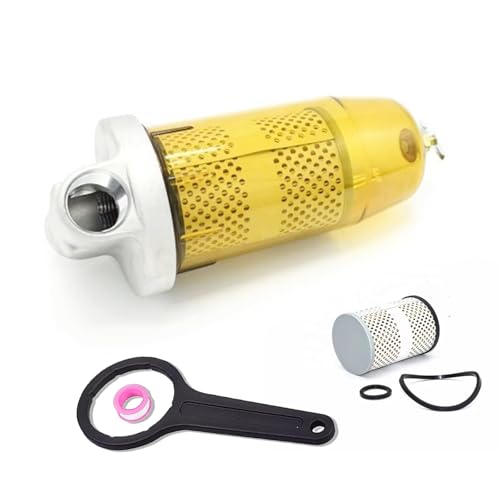
WZUMLAP’s 496 model emphasizes compatibility across gasoline and diesel fuels, with a 30-micron filtration element and a 1″ NPT inlet/outlet configuration. The kit includes a wrench for quick media changes, aiding field maintenance. The 25 GPM maximum flow and 150 PSI operating pressure align with many standard fuel systems while offering a robust filter head design. The inclusion of the wrench simplifies servicing, particularly in professional or fleet contexts where uptime matters.
Key selection notes include balancing filtration efficiency with flow needs. For high-demand engines, verify that the 30-micron rating maintains adequate flow under your operating pressures. Also confirm biodiesel tolerance and the exact tank connection layout to ensure a proper fit.
Buying Guide: Key Purchase Considerations
- Fuel compatibility: Confirm whether the separator supports gasoline, diesel, or both, and check compatibility with biodiesel blends if applicable.
- Filtration rating: Micron size matters. A finer micron rating (e.g., 17–30 µm) provides stronger protection against small particles but may reduce flow, depending on system design.
- Moisture control: Some models use water-absorbing polymers with a built-in replacement indicator. Assess whether your operation benefits from a moisture-sensing feature or standard filtration.
- Top cap and fittings: Note the top-cap size (1″ vs 3/4″ NPT) and ensure compatibility with your fuel line connections and mounting space.
- Material durability: Zinc die-cast tops provide robust connections; consider bowl materials and oil resistance for long-term service in harsh environments.
- Flow rate and pressure: Check maximum GPM and operating PSI to ensure the unit can meet your engine’s demand without causing pressure drops.
- Maintenance access: Look for clear bowls for visual inspection, and consider whether the unit includes tools (like a wrench) for media changes.
- Replacement parts and lifecycle: Verify part numbers (e.g., replacements for B10-AL) and availability of media replacements to plan for maintenance intervals.
- Installation footprint: Measure available space and verify whether a large or compact filter is required for your tank shape and mounting.
- Cost of ownership: Factor in replacement media, seals, and potential fleet-wide maintenance training when assessing total cost of ownership.
Across these options, the best choice depends on your fuel type, required flow, space constraints, and maintenance practices. For diesel-focused setups, models emphasizing 30 µm filtration and reinforced bowls can provide durable protection in demanding environments. For mixed or gasoline-heavy systems, selecting a model with versatile fuel compatibility and a clear maintenance indicator supports broader use and straightforward upkeep.
Add a Comment