Choosing the right industrial coolant filtration system ensures longer coolant life, cleaner work fluids, and less tool wear in demanding metalworking environments. This guide highlights five top options, detailing who each product is best for, and why it’s a solid pick for shop floors that run CNC machines, lathes, grinders, and other cutting equipment. Use this article to compare features, compatibility, and practical limitations to match your coolant needs with the right filtration approach.
Summary table of chosen products
| Product | Best For | Main Benefit | |
|---|---|---|---|
| INTSUPERMAI Industrial Coolant Skimmer | Heavy-duty CNC shops with high-viscosity fluids | Efficient oil removal and extended coolant life | Moderate filtration depth (oil-focused) |
| CNCTOPBAOS Cutting Cooling Spray Pump | Precision CNC and engraving operations needing spray cooling | Precise spray delivery and fluid conservation | Spray-focused, not a full filtration unit |
| Orion Motor Tech Coolant Vacuum Refill Kit | Fast, clean coolant refilling and air removal | Efficient vacuum-assisted drainage and refill | Not a standalone filtration device |
| Killer Filter Replacement for Ingersoll RAND Ultra | Engineered coolant filtration replacements | Simple cartridge-based filtration | Brand-specific replacement scope |
| WIKIBB Inline Heater Core Filter | Automotive or small-scale coolant loops with inline filters | Durable stainless steel filter and glass housing | Automotive orientation; not a large industrial system |
INTSUPERMAI Industrial Coolant Skimmer

Best for high-viscosity coolant systems in metalworking shops, this skimmer focuses on oil removal from cutting fluids. The 10-liter separation tank supports 2 mm filtration, helping extend coolant life up to three times in demanding CNC operations. The unit is compatible with pH 5–11 fluids and 0–70°C temperatures, making it suitable for heavy-duty environments where coolant recycling reduces replacement frequency and tool wear.
Why it’s selected: It targets oil separation efficiently, which directly lowers oil buildup that can degrade coolant quality and machine performance. The built-in purge valve reduces maintenance downtime by preventing sludge accumulation. It’s best for shops prioritizing extended coolant life and cleaner fluid in mid-to-large scale metalworking setups.
Limitations: It emphasizes oil recovery more than comprehensive solid particle filtration, so for applications needing heavy debris removal, pairing with a dedicated solids filter may be beneficial.
CNCTOPBAOS Cutting Cooling Spray Pump

This spray pump system is designed to deliver coolant precisely where needed during cutting or engraving. It includes adjustable air flow and spray mist volume, a 3-liter tank, and a robust copper nozzle assembly. The setup is ideal for operators who want targeted cooling, reduced fluid waste, and improved surface finishes on delicate tooling applications.
Best for: shops needing precise, low-volume coolant application that minimizes overspray while preserving fluid efficiency. Choose this if your CNC or engraving work benefits from accurate spray control rather than bulk filtration.
Limitation: It functions as a spray cooling accessory rather than a full filtration tower, so it should be used alongside a dedicated filtration system if coolant cleanliness is a priority.
Orion Motor Tech Coolant Vacuum Refill Kit

This refill kit helps operators fill cooling systems quickly with minimal mess, using a vacuum to remove air pockets and fill coolant efficiently. It reaches up to -27 inHg, aiding in reducing overheating risk and ensuring consistent coolant circulation. It also provides vacuum leak detection to identify airtight issues in the system.
Best for: shops seeking to streamline coolant charging and reduce air pockets in established cooling circuits. It’s a strong complement to filtration systems that remove particulates while this tool ensures the system is fully purged and bled.
Limitation: Not a filtration device itself; rely on a separate filtration unit or filtration cartridge to remove particulates from the coolant before reuse.
Killer Filter Brand Replacement for Ingersoll RAND Ultra COOLANT-05
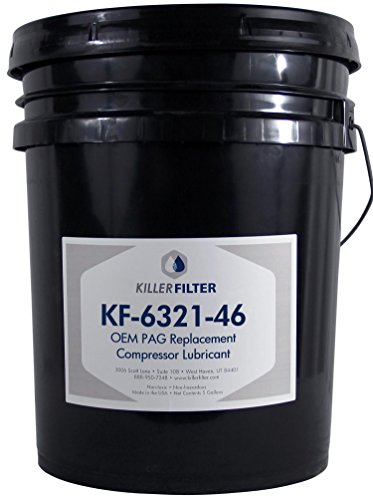
This replacement filter line focuses on standalone coolant filtration cartridges. It provides a simple, easy-to-install option for shops already operating compatible filtration suites under the Ingersoll RAND Ultra ecosystem. The product emphasizes USA manufacturing quality and media selection for reliable performance.
Best for: users who need straightforward, cartridge-based filtration replacements within compatible coolant systems. Choose this if you rely on a modular filtration approach rather than a full integrated filtration tower.
Limitation: Limited to a specific model ecosystem; ensure compatibility before purchase to avoid compatibility gaps with non-cartridge systems.
WIKIBB Inline Heater Core Filter

This inline heater core coolant filter uses a stainless-steel cartridge and borosilicate glass housing, offering durability in high-temperature coolant loops. It’s designed to filter out debris and particulates from the coolant, helping prevent clogging and extending component life. Easy disassembly for cleaning supports a longer service life.
Best for: systems requiring robust inline filtration with durable materials in automotive or small-scale industrial loops. Choose this when you need a reliable inline filter that’s straightforward to clean and reuse.
Limitation: Primarily an inline filtration solution; it does not replace a full cooling tower or a large-scale filtration system in high-volume metalworking environments.
Buying Guide: Key Considerations for Selecting Industrial Coolant Filtration
- Filtration goal: Are you prioritizing oil separation, particle filtration, or both? Some systems emphasize oil skimming, while others target debris and particulate removal.
- Fluid compatibility: Check pH, temperature, and viscosity compatibility. Choose units rated for your coolant chemistry and operating range to prevent corrosion or clogging.
- System integration: Consider how a filtration unit will integrate with existing tanks, lathes, and grinding machines. Inlet/outlet sizes and valve configurations matter for a seamless setup.
- Maintenance burden: Look for purge valves, easy-clean cartridges, and clear servicing paths. A design that reduces downtime is beneficial in high-output shops.
- Operational scope: Decide whether you need a standalone filtration tower, an inline filter, a spray cooling accessory, or a refill/bleed toolkit to complement filtration.
- Energy and footprint: Energy-efficient units with compact footprints help reduce shop floor heat and occupy less space in crowded shops.
Frequently Asked Questions
- What should I prioritize first in an industrial coolant system: filtration or recycling?
– If coolant lifespan is your main concern, prioritize filtration features that remove oils and particulates; recycling capabilities help extend life but work best when paired with filtration. - Can a spray cooling pump replace a filtration unit?
– No, spray cooling provides targeted cooling, while filtration purifies the fluid. Use both if your workflow benefits from precise cooling and clean fluid. - Are inline filters suitable for all coolant systems?
– Inline filters are versatile but best for closed-loop systems where you can connect them directly in the fluid path and perform regular cleaning. - What maintenance is typical for coolant filtration systems?
– Expect routine cartridge changes, periodic purging, and cleaning of tanks and filtration housings to prevent sludge buildup. - How do I know which product is best for my machine shop?
– Match the system to your main pain point (oil build-up, particulate contamination, or both), then consider compatibility with your existing tanks and fluid chemistry. - Is a higher-capacity unit always better?
– Not necessarily: higher capacity works for larger volumes or higher throughput, but you should balance capacity with space, maintenance, and cost considerations.
Add a Comment