For builders, mechanics, and outdoor equipment users, precise oil-to-gas ratios are essential for engine performance and longevity. This guide highlights five reliable measurement tools that help ensure correct mixes, whether you’re fueling a two-stroke engine, testing oil quality, or dispensing bulk oil. The selected products cater to hobbyists, professionals, and fleet maintenance alike, with options that emphasize accuracy, ease of use, and spill prevention.
| Product | Best For | Key Benefit |
|---|---|---|
| Ratio Rite Perfect Gas – Oil Mixture | Small-volume, precise mixes | Precalibrated ratio marks for quick, accurate fills |
| [2-Pack] Wide Mouth Measuring Bottle | Multiple ratios, spill-free pours | Wide mouth, six ratios, smudge-proof markings |
| Lisle 19702 8 Quart Dispenser | Bulk oil dispensing and storage | Spout cap and lid to keep contaminants out |
| Engine Oil Quality Tester (Autory) | Oil condition diagnostics | Transmittance and temperature readings for oil health |
| KiBcsLic Power Tool Mix Bottle | Versatile 2-stroke mixing | Clear multi-unit markings for accurate ratios |
Ratio Rite Perfect Gas – Oil Mixture
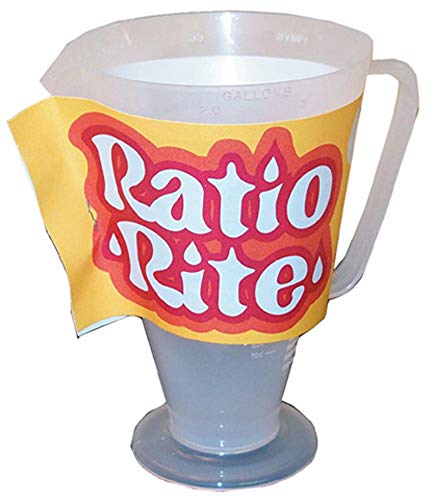
The Ratio Rite is designed for small-batch oil-to-gas blending with predefined ratios. Best for hobbyists and professionals who mix oil for transmission oil and other fluids in ranges from 16:1 to 70:1, with total capacity of 24 oz. It provides calibrated marks on the container to simplify the measurement process and reduce errors during mixing. Choose this if you want a compact, single-purpose tool that focuses on quick, repeatable ratios for smaller volumes.
Best for: direct, precise small-batch mixing where a single, pre-set ratio is advantageous. Limitations: limited to 24 oz total capacity; may not suit larger-volume fueling tasks.
[2-Pack] Wide Mouth Oil / Gas Measuring Bottle

This 2-pack provides two durable wide-mouth bottles with six mixing ratios (24:1, 32:1, 40:1, 50:1, 60:1, 100:1). Markings cover ounces, milliliters, cubic centimeters, gallons, and liters, making it ideal for on-site fueling and quick oil-to-fuel prep. The wide mouth design minimizes spills, and a tight-locking cap solidifies leaks prevention. Best for professionals who need flexible ratios and multiple bottles for different tasks.
Best for: contractors and shop environments that require reusable, multi-ratio mixing bottles. Limitation: may be bulkier to carry in tight spaces compared to single-purpose tools.
Lisle 19702 8 Quart Dispenser
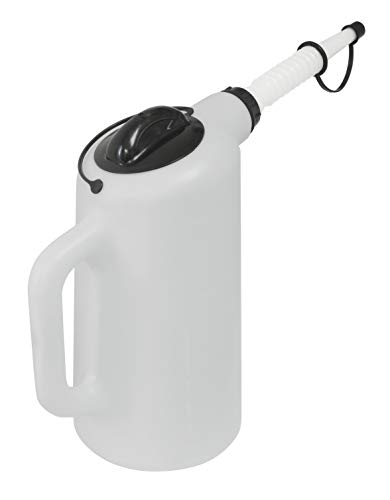
The Lisle 8 quart dispenser emphasizes storage and dispensing efficiency for larger quantities. It includes a spout cap and lid to keep out contaminants, which is particularly helpful for maintaining oil integrity between uses. This option suits maintenance bays or larger vehicles that require more oil per service interval. Best for: fleet maintenance with routine oil management where contamination protection is essential. Caution: larger capacity may be less portable for fieldwork.
Engine Oil Quality Tester (Autory)

The Autory Engine Oil Quality Tester provides transmittance and oil-temperature measurements via a 50-inch probe. It supports both gasoline and diesel oil testing modes, offering flexibility for mixed-vehicle fleets. This tool helps diagnose oil condition by detecting contaminants and monitoring temperature, aiding preventive maintenance. Best for: automotive shops and motorcycle mechanics who need quantitative oil condition data. Caution: data interpretation requires some familiarity with transmittance readings.
KiBcsLic Power Tool Petrol Mix Bottle

The KiBcsLic mixing bottle is designed for 2-stroke engines commonly used in landscaping tools. It features versatile compatibility with multiple engine types and clear multi-unit markings to ensure precise oil-to-fuel ratios. The container is built to withstand outdoor use and rough handling. Best for: landscapers and DIY users who frequently mix oils for two-stroke tools. Caution: ensure you use the correct ratio for your specific tool to prevent engine damage.
Buying Guide
What should I consider when choosing oil-to-gas measuring gear?
Think about capacity needs, typical engine type, and whether you prefer a single-purpose tool or a multi-ratio bottle set. For small-volume work, compact cups or single-ratio dispensers are convenient. For fleets or frequent maintenance, a larger dispenser or a multi-pack bottle set offers better flexibility.
How important is ratio range and calibration?
Accurate ratios reduce the risk of engine damage and poor performance. Look for calibrated marks, clear unit conversions (oz, ml, cc, gallons, liters), and ratios that align with your engines’ requirements. Six to seven common ratios across different brands help cover most two-stroke needs.
Which features help prevent spills and contamination?
Wide-mouth designs and tight-seal caps prevent spills during pouring and mixing. Lids or spout caps protect contents from dust and contaminants, useful in workshop environments or outdoor jobsites. Consider containers with leak-proof seals for transport between locations.
What materials balance durability and visibility?
Clear or translucent plastics like polypropene (PP) allow you to inspect contents easily. Thick walls improve durability in outdoor settings. Choose materials that withstand oil and fuel exposure without clouding or cracking over time.
How does this equipment fit into maintenance workflows?
Portability and ease of integration with existing tools matter. Small, lightweight bottles suit fieldwork and quick checks, while larger dispensers fit shop floors and bulk tasks. Pairing a precision tester with a reliable measuring bottle creates a comprehensive oil-management workflow.
Additional perspectives
- For home DIYers, a two-pack of wide-mouth bottles can cover multiple ratio needs without switching tools.
- Professional shops may prefer testers for oil quality alongside a calibrated mixing bottle for consistent results.
- Consider spare caps or lids to ensure always-ready gear during busy days.
Frequently Asked Questions
- What is the most common oil-to-gas ratio for 2-stroke engines?
Typical ratios include 32:1, 40:1, and 50:1, depending on engine and oil specification. - Can I reuse oil measuring bottles across multiple fuels?
Yes, if they are properly cleaned and kept free of cross-contamination. Use dedicated bottles for each fuel type when possible. - What should I do if markings fade over time?
Replace the bottle or re-mark the container. Faded markings can lead to incorrect mixes. - Is an oil quality tester useful for diesel engines?
Yes, many testers offer diesel mode to assess oil condition and help diagnose wear-related issues. - Are wide-mouth bottles safer for spill-prone environments?
Yes, wide-mouth designs generally reduce spills and make pouring easier, especially in busy jobsites.
Add a Comment