Finding the right desiccant dryer for your air compressor helps protect tools and extend system life. This guide highlights five suitable options, focusing on inline and compact units that remove moisture efficiently. Best for workshop pros, hobbyists, and small to mid-size shops needing reliable moisture control.
| Product | Best For | Why It Stands Out |
|---|---|---|
| Milton 1170-2 | Compact setups | Low-profile FRL desiccant dryer with 1/2″ NPT threads and clear moisture protection. |
| Dry & Dry Blue Beads | Budget and reusables | Blue-to-pink indicating silica gel beads, reusable with simple reactivation. |
| NANPU Zinc Alloy Dryer | Rugged inline filtering | Zinc alloy body for durability and fast drying in compact lines. |
| DEWALT 3/8″ Inline | Higher-efficiency inline drying | Clear viewing window and solid 175 psi rating for integrated systems. |
| RVMARINEPAT 1/2″ All-in-One | Industrial systems | All-in-one dry system with filter, regulator, and desiccant components. |
Milton 1170-2 1/2″ Compact FRL Desiccant Dryer
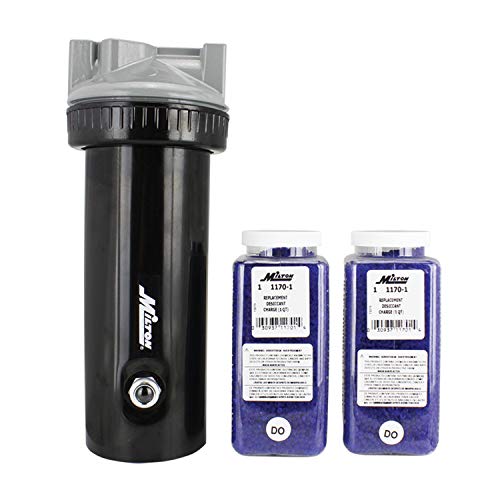
The Milton 1170-2 is a compact FRL desiccant dryer designed for 1/2″ NPT piping and up to 250 psi. It appeals to users needing a small-footprint option in home or light commercial applications. Best for setups where space is limited and a simple dry-out stage is required. A notable pro tip is to dry desiccant beads in an oven at 275°F for about 3 hours to refresh performance. Caution: ensure compatibility with your line pressure and threading before installation.
Dry & Dry Blue Indicating Silica Gel Beads

These blue-indicating silica gel beads are a cost-effective, reusable desiccant option for air dryers, 3D printers, and compressors. Best for users who want a visible moisture indicator and easy reactivation in the oven (0.5–2 hours at 200–250°F). The color shift from blue to pink signals roughly 50–60% moisture absorption, but you may still have substantial capacity left. Use caution with health considerations: cobalt chloride is present in some variants, so verify product safety if handling frequently. Choose this if you want a straightforward, reusable desiccant with clear color cues.
NANPU Zinc Alloy Desiccant Dryer

The NANPU unit uses a zinc alloy body for enhanced hardness and compression resistance, supporting 0–145 psi (0–10 bar) output. Best for inline drying in compact lines where durability matters. It’s a practical choice for workshops needing a sturdy, in-line moisture removal solution. Limitations include a narrower pressure range compared to some heavier systems, so confirm your operating pressure before installation.
DEWALT 3/8″ NPT Inline Desiccant Dryer

DEWALT’s inline model features a 3/8″ NPT inlet with a clear viewing window and a maximum pressure of 175 psi. It is well-suited for integrated systems where quick moisture removal is essential and inspection of desiccant life is convenient. Best for professional setups that require a visible moisture indicator and robust moisture removal, but avoid if your system operates at or near 250 psi, which exceeds this unit’s rating.
RVMARINEPAT 1/2″ All-in-One Desiccant System

This all-in-one air dryer system combines a water-trapping filter, regulator, and a coalescing/micron filtration stage with desiccant drying. Best for workplaces seeking a turnkey dryer solution with multiple stages of moisture and particulate removal for a cleaner compressed air stream. A clearly visible alert indicates when a filter element or desiccant needs replacement. Limitation: installation may be more involved than single-desiccant units, and it is larger in footprint.
Buying Guide
Essential considerations when choosing a desiccant dryer for an air compressor:
- System compatibility: Verify thread size (NPT), inlet/outlet pressures, and overall footprint to fit your setup.
- Moisture removal efficiency: Inline dryers and all-in-one systems vary in how quickly they remove moisture; consider your tool load and humidity levels.
- Desiccant type: Silica gel beads offer reusability but require reactivation; crystalline desiccants differ in performance and safety.
- Durability and materials: Zinc alloy or metal bowls improve durability in harsh workshop environments; plastic bowls may be lighter but less rugged.
- Maintenance ease: Look for clear sight windows, drain valves, and visible indicators for desiccant life to reduce downtime.
- Safety and reliability: Ensure systems are rated for your maximum operating pressure; consider built-in protections like auto drains and condensate traps.
FAQ
- What is a desiccant dryer used for in air compressors?
It removes moisture from compressed air to protect tools and downstream equipment from corrosion and freezing damage.
- Can I reuse desiccant beads?
Some beads are reusable after reactivation in an oven or microwave, but always follow the manufacturer’s instructions for safe reactivation.
- What is the difference between inline and all-in-one dryer systems?
Inline dryers are inserted in-line for moisture removal; all-in-one systems combine multiple components (filter, regulator, desiccant) for a complete solution.
- What should I consider regarding pressure ratings?
Choose a unit with a maximum pressure at least equal to your system’s working pressure to avoid performance issues or equipment damage.
- Are blue-to-pink indicator beads safer than other indicators?
Indicator beads provide a straightforward moisture cue, but check for any hazardous components (like cobalt salts) and prefer safer formulations when handling frequently.
Add a Comment