Answering the need for clean, reliable, and precise liquid transfer, this guide highlights top food-grade gear pumps suitable for kitchens, small-batch labs, breweries, and small-scale manufacturing. These options are best for users seeking sanitary construction, consistent flow, and ease of cleaning. The top picks include compact micro pumps for low-volume work, corrosion-resistant models for dairy and beverages, and high-viscosity pumps for pastes and syrups. The table below summarizes key specs to compare at a glance.
| Product | Brand | Best For |
|---|---|---|
| Aitoserlea DC 24V Micro Gear Pump | Aitoserlea | Low-volume, precise dosing |
| LeTkingok DC 24V Micro Gear Pump | LeTkingok | Corrosion-resistant, medium viscosity |
| UGLTSAGRE PG4 Gear Pump 12V/24V | UGLTSAGRE | Small installations requiring mounting flange |
| NYANS Honey Transfer Pump | NYANS | Very viscous liquids like honey and pastes |
| Pfps Electric Viscous Liquid Pump | Pfps | High-viscosity liquids with adjustable flow |
Aitoserlea 24V Micro Gear Pump

Best for precise, small-volume dosing in food-grade applications. Pump body made from 304 stainless steel, offering corrosion resistance and cleanability. Displacement is 0.65 mL per revolution, enabling accurate metering in beverage, dairy, or small-batch culinary processes. Choose this when you need compact size and consistent flow with minimal waste.
Who it’s best for: small-batch cooks, hobby brewers, or lab technicians needing precise, repeatable dosing without large equipment. Limitation: not designed for high-viscosity fluids; performance is optimized for low-to-medium viscosity liquids.
Ferroday Wort Brewing Pump

Best for transferring hot wort in homebrew operations where a magnetic drive design minimizes contamination risk and simplifies cleaning. Note: this is not a self-priming unit; install lower than the vessel and pre-fill to avoid slow startup. It handles heat well (up to 120°C) and offers quiet operation with damping and anti-vibration features.
Who it’s best for: home brewers and small-scale beverage operations. Limitation: inappropriate for high-viscosity liquids and requires proper priming and installation height to ensure optimal flow.
LeTkingok DC 24V Micro Gear Pump
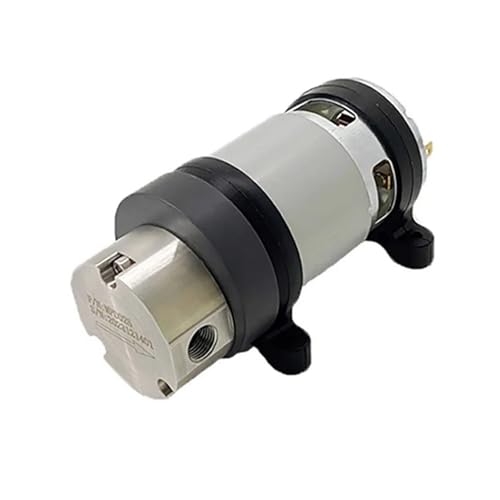
Best for corrosion-resistant, food-grade metering in a compact package. It handles medium viscosity liquids and operates within a temperature range from -20 to 100°C. Inlet vacuum around -0.85 Bar supports suction performance in enclosed systems.
Who it’s best for: users needing a sanitary, durable metering pump with robust stainless steel construction. Limitation: check viscosity limits to ensure it matches your liquid’s thickness for reliable priming and flow.
UGLTSAGRE PG4 Food Grade Gear Pump

Best for compact installations requiring a mounting flange and shaft key for secure integration. This PG4 gear pump is designed for food-grade applications with a robust drive, suitable for cold or hot water and viscous liquids. It emphasizes reliable mechanical coupling and ease of assembly.
Who it’s best for: equipment designers and operators seeking easy mounting and stable operation in small lines. Limitation: ensure compatibility with your piping size and electrical supply, as listed by the model’s specs.
NYANS 6-10L/Min Honey Transfer Pump

Best for handling very viscous fluids like honey and pastes. This pump delivers up to 9 kg of viscous material per minute with adjustable speed, driven by a pure copper motor. Its large-displacement rotor supports stable flow and precise filling in confectionery or beverage operations.
Who it’s best for: producers of thick sauces, syrups, or nut pastes needing controlled, steady transfer. Limitation: designed for high-viscosity liquids; may be less efficient with low-viscosity fluids without flow control adjustments.
Pfps Electric Viscous Liquid Pump

Best for high-viscosity transfer with adjustable speed. This 90W gear pump features a copper motor, a durable stainless steel cam rotor, and a non-stick plastic pump head. Suitable for peanut butter, sesame butter, and similar semi-solid liquids where precise flow is required.
Who it’s best for: food manufacturers and kitchens dealing with thick pastes. Caution: ensure the liquid viscosity remains within the advertised range for reliable operation; too-thin liquids may require different settings or a different pump.
Buying Guide
- What viscosity can the pump handle? High-viscosity liquids require pumps designed for thick pastes; check cps or mPa·s ranges.
- What is the required flow rate and displacement? Micro pumps offer precise metering at small volumes; larger units move more fluid per revolution.
- Is the liquid temperature a concern? Food-grade stainless steel and heat tolerance (e.g., up to 120°C) help with hot liquids and paste-like products.
- Is priming or suction height important? Some magnetic drives and compact gears require proper priming or certain installation heights to avoid poor startup.
- What maintenance is expected? Look for easy disassembly, dead-angle-free interiors, and cleanability for sanitary environments.
FAQ
- Q: Are these pumps suitable for dairy products? A: Yes, many are built with 304 stainless steel and food-grade components, making them suitable for dairy and beverages when used within their viscosity and temperature specifications.
- Q: Do they require priming before use? A: Some models require priming or filling prior to operation to avoid slow startup and ensure steady flow.
- Q: Can I transfer hot liquids with these pumps? A: Some pumps are rated for high temperatures (up to 120°C / 248°F). Always check the model’s temperature limits before use.
- Q: Which pump is best for honey or nut pastes? A: Pumps designed for high viscosity with large rotor displacement, like the NYANS and Pfps options, are better for pastes and honey.
- Q: Do these pumps have mounting options? A: Several models offer flange mounting or compact footprints; confirm the mounting method matches your system design.
- Q: Is a magnetic drive safer for sanitary applications? A: Magnetic drive reduces seal contact with the liquid and can enhance cleanliness, but ensure proper installation and priming requirements are followed.
Add a Comment