The best food truck hood with fire suppression protects your kitchen on wheels while simplifying compliance and maintenance. These systems are ideal for mobile chefs, concession operators, and caterers who cook with grease-heavy equipment in limited spaces. The top picks below balance fire safety, installation practicality, and durability for various trailer sizes and layouts. Each option is best for different setups—choose based on hood length, integration, and maintenance needs. The following table highlights key specs to compare at a glance.
| Product | Hood Length | Best For | Why It Stands Out |
|---|---|---|---|
| HOODMART UL/NSF 9′ Concession Trailer Hood System | 9 ft | Large mobile kitchens | Low profile design with pre-piped fire suppression; USA-made with NSF/UL approval. |
| HOODMART UL/NSF 6′ Concession Trailer Hood System | 6 ft | Medium setups | Space-conscious footprint with integrated fire system. |
| HOODMART UL/NSF 5′ Concession Trailer Hood System | 5 ft | Compact trailers | Lower profile for tight trailers and easy installation. |
| 6′ Integrated Exhaust Hood & Fan System with Kidde | 6 ft | Integrated ventilation needs | Patent-pending low box design with integrated blower and louvered exhaust. |
| 4′ Integrated Exhaust Hood & Fan System | 4 ft | Smaller trailers or limited headroom | Efficient airflow with advanced exhaust features in a compact package. |
HOODMART UL/NSF 9′ Concession Trailer Hood System
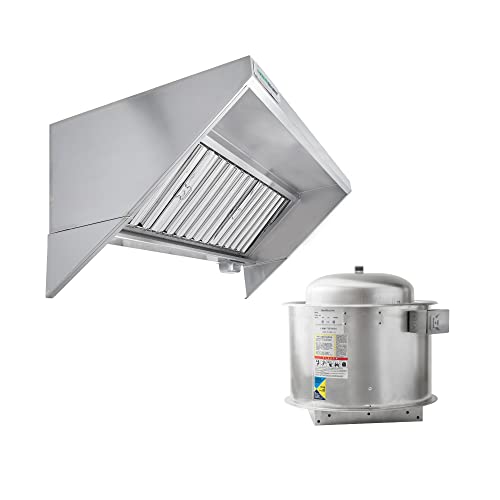
This 9-foot Hood System is designed for larger food trucks or concession trailers. It is NSF and UL approved and comes with a pre-piped fire suppression system from Kidde, offering integrated safety for high-volume cooking zones. The low-profile top helps maximize clearance above stoves, griddles, and fryers. Best for operators who need a full-length hood without a bulky roof-mounted setup.
Who it’s best for: businesses with extended cooking lines and multiple heat stations that require robust smoke and grease control in a single, streamlined unit.
Why chosen: The combination of a long, single-piece hood with an integrated fire suppression system provides comprehensive safety coverage and reduces installation complexity. The included install kit supports faster setup in mobile kitchens.
Limitation to note: A longer hood can demand more vehicle space and may require precise alignment during installation. Ensure your trailer length and mounting area accommodate a 9-foot system.
HOODMART UL/NSF 6′ Concession Trailer Hood System
This 6-foot hood provides a balanced option for mid-sized food trucks. It features a low-profile design and a pre-piped fire suppression system, meeting NSF and UL standards. It’s suitable for trailers with moderate cooking capacity and a need for efficient venting and grease management.
Who it’s best for: operators who require a compact, yet capable hood that fits standard concession trailers with multiple cooking stations.
Why chosen: The 6-foot configuration delivers strong exhaust performance while maintaining a smaller footprint, helping to preserve workspace in tighter trailers.
Limitation to note: May be less ideal if your trailer’s layout demands very long, uninterrupted hood coverage or if you operate a high-velocity cooking line that benefits from larger hood area.
HOODMART UL/NSF 5′ Concession Trailer Hood System
This 5-foot hood is designed for compact mobile kitchens with limited installation space. It includes a pre-piped fire suppression system for safety and a low-profile top to maximize clearance near cooking equipment. It’s a practical choice where space is at a premium.
Who it’s best for: operators running small trailers or temporary setups with one or two cooking stations that still require reliable fire suppression.
Why chosen: It provides essential fire protection without overwhelming the trailer’s footprint, making it a versatile option for weekend pop-ups or seasonal trailers.
Limitation to note: The shorter hood could limit coverage for longer cooking lines; consider this if you anticipate rapid expansion or more grills in use simultaneously.
6’ Integrated Exhaust Hood & Fan System with Kidde Fire Suppression

This model combines a 6-foot hood with an integrated blower and motor, reducing installation steps and roof fan requirements. It includes a factory-mounted duct grease system, two hanging rails, and an integrated louvered exhaust to minimize exposure to water and dirt. Best for operators seeking a cleaner, simpler install with robust airflow.
Who it’s best for: mid-sized food trucks that want a turnkey solution with streamlined assembly and reliable fire safety integration.
Why chosen: The all-in-one design minimizes on-site work and offers strong exhaust performance with a durable, USA-made construction.
Limitation to note: Integration complexity can vary by trailer model; verify compatibility with your existing ductwork and mounting space before purchase.
4′ Integrated Exhaust Hood & Fan System
This compact 4-foot hood targets smaller trailers or limited headroom kitchens. The system includes an integrated blower and motor, similar to larger HOODMART models, with a single exhaust louver and side curtains for protection. It’s a good fit where space is at a premium but fire suppression remains essential.
Who it’s best for: operators operating small trailers with one or two cooking zones and strict space constraints.
Why chosen: The 4-foot option preserves valuable trailer length while maintaining effective smoke and grease management and safety features.
Limitation to note: The smaller hood may offer less overall capture area, so plan for the specific menu and stove layout you employ.
Buying Guide: Key Considerations for Food Truck Hoods With Fire Suppression
- Footprint vs. kitchen layout: Measure trailer length and ensure the hood length fits without obstructing access to stoves or prep areas.
- Fire suppression compliance: Look for NSF and UL approvals and a pre-piped system from a trusted brand to ensure faster, safer installations.
- Integrated vs. separate components: Integrated hoods with built-in blowers simplify installation; standalone exhausts may require more ductwork but can offer flexibility in some layouts.
- Ventilation performance: Consider CFM (airflow) relative to cooking equipment; higher CFM is beneficial for multiple or high-heat stations.
- Durability and materials: Stainless steel construction resists heat and grease, ensuring long-term durability in mobile kitchens.
- Maintenance accessibility: Designs that allow easy access to filters, grease trays, and suppression systems reduce downtime and servicing complexity.
- Installation kit and support: Packages with install kits and clear mounting instructions save setup time and reduce on-site challenges.
- Space for future expansion: If planning to add more stations or upgrade equipment, choose a hood with room to grow or compatible add-ons.
Frequently Asked Questions
- What is the benefit of a fire suppression system in a food truck hood? It provides immediate fire control around grease-laden heat zones, improving safety and reducing property risk.
- Is NSF/UL approval important for food truck hoods? Yes. It indicates compliance with safety and sanitation standards, which helps with inspections and insurance.
- Should I choose an integrated hood or a separate exhaust system? Integrated hoods simplify installation and reduce roof clutter, but separate systems can offer more flexible placement in some trailers.
- Does hood length affect cooking performance? Longer hoods cover more cooking area and typically provide better capture of smoke and grease, but require more trailer space.
- What maintenance is required for hood fire suppression? Regular inspections of the suppression system, grease traps, and ductwork are standard; follow manufacturer guidelines for interval checks.
- How do I know which hood is right for my trailer? Consider your trailer size, number of cooking stations, and typical menu; match hood length and airflow to your needs.
Add a Comment