Answering the needs of welders and maintenance technicians, nickel alloy welding rods provide reliable joints for cast iron and steel connections. This guide highlights five strong options and explains who benefits most from each. Whether you’re repairing gray iron, ductile iron, or casting-to-steel joints, these rods offer corrosion resistance, good machinability, and solid crack resistance under typical shop conditions.
| Product | Best For | Key Benefit |
|---|---|---|
| ENi-CI 99% Nickel Cast Welding Electrode Rods (6pcs, 12″ x 3/32″) | Soft-weldable cast iron with easy machining | Pure nickel weld metal; good for normal grades cast irons |
| ENiFe-CI 55% Nickel 12″ Rods (7pcs, 3/32″) | Cast iron to steel joints | Excellent current-carrying capacity; stronger, crack-resistant welds |
| ENi-CI 99% Nickel Cast Welding Electrode Rods (15pcs, 12″ x 3/32″) | Heavy-duty cast iron repairs | Pure nickel with ready-to-use packaging; suitable for industrial use |
| ENiFe-CI Nickel-Iron Welding Rods (15 Pcs, 12″ x 3/32″) | Crack-prone cast iron repairs | High welding performance; stable with higher resistance to solidification cracking |
| ENiFe-CI Nickel-Iron (10 Pcs, 1/8″ x 14″) | Crack resistance and joining iron to steel | Strong weld metal; good for industrial and maintenance welding |
ENi-CI 99% Nickel Cast Welding Electrodes (6pcs)

Brand: Fox Alloy
Material and compliance: ENi-CI electrodes conform to AWS A5.15, EN ISO 1071, GB/T10044 standards. The weld metal is soft and easily machinable, suitable for cast irons with cold or slight preheat deposition.
Who this is best for: This product is ideal for shops focusing on soft, machinable nickel welds on normal-grade cast irons. Choose this if ease of machining after welding is a priority.
Caution: Pure nickel welds can be softer and may require precise heat control to avoid distortion on larger parts.
ENiFe-CI 55% Nickel 12″ Rods (7pcs)

Brand: Fox Alloy
Material and compliance: ENiFe-CI electrodes meet AWS A5.15, EN ISO 1071 standards and GB/T10044; designed to weld cast irons and join to steel with good current-carrying capacity.
Who this is best for: Best for scenarios requiring stronger welds and better resistance to cracking when joining cast iron to steel. Consider this if you’re addressing more demanding cast iron joints.
Caution: The nickel-iron blend requires attention to clamping and preheat planning to minimize stress cracking on larger assemblies.
ENi-CI 99% Nickel Cast Welding Rods (15pcs)
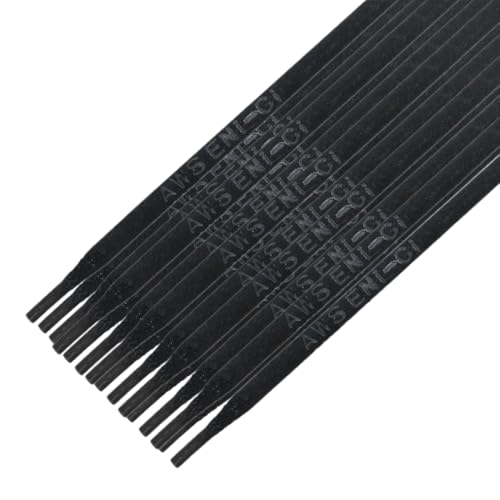
Brand: Fox Alloy
Material and compliance: ENi-CI electrodes fully meet AWS A5.15, EN ISO 1071, GB/T10044 certified specs; pure nickel weld metal remains soft and highly machinable when depositing on cold or low-temperature preheat.
Who this is best for: Suitable for users needing plentiful supply for extensive maintenance or production work on gray and ductile iron. Choose this for long-running project continuity.
Caution: Ensure proper storage to maintain electrode integrity; extended exposure to moisture can affect performance.
ENiFe-CI Nickel-Iron Rods (15 Pcs, 12″)

Brand: Fox Alloy
Material and compliance: ENiFe-CI electrodes comply with AWS A5.15, EN ISO 1071, GB/T10044; designed for cast iron welding with strong current-carrying capacity and resistance to solidification cracking.
Who this is best for: Best for repairs where nickel-iron composition provides stronger welds and better coping with solidification cracking. Good for cast iron-to-steel joints.
Caution: Slightly higher stiffness in the weld metal may require careful heat management during tool-out and finishing.
ENiFe-CI Nickel-Iron 10 Pcs (1/8″ x 14″)

Brand: Fox Alloy
Material and compliance: ENiFe-CI standards aligned with AWS A5.15, EN ISO 1071, GB/T 10044; designed for high-strength joints with crack resistance in gray and nodular cast iron.
Who this is best for: Choose this when repairing larger cast-iron components or when welding cast iron to steel with a need for robust, crack-resistant welds.
Caution: The 1/8″ diameter may demand slightly higher amperage control; verify fit for your welding machine before use.
Buying Guide
What should I consider when choosing nickel alloy welding rods?
- Material compatibility: Match the rod’s nickel content to your base metals (cast iron, steel, gray vs ductile iron).
- Alloy blend: Pure nickel offers excellent ductility and machinability; nickel-iron blends improve cracking resistance and strength.
- Preheat and heat input: Some nickel alloys weld well at lower preheat, while others tolerate mild preheats to reduce cracking risk.
How do I decide between pure nickel and nickel-iron rods?
- Choose pure nickel (ENi-CI) for soft, machinable welds on cast iron where post-weld machining is a priority.
- Choose nickel-iron (ENiFe-CI) when cracking resistance and strength are critical, especially on cast iron-to-steel joints.
What size and length are typical for repair work?
- Common sizes are 3/32″ diameter and 12″ length for general purpose repairs; 1/8″ diameters suit heavier deposits on larger parts.
- Stock multiple pieces in the same size to cover various repair scenarios without changing welding settings frequently.
Which assurance and standards should I look for?
- Standards such as AWS A5.15, EN ISO 1071, and GB/T10044 indicate the electrode’s compatibility with industry weld requirements.
- Notes on toughness, current-carrying capacity, and resistance to solidification cracking help predict performance in production settings.
Practical tips for use
- Ensure proper storage to prevent moisture absorption, especially for high-nickel rods.
- Test deposition on scrap pieces to fine-tune amperage and travel speed before critical repairs.
- Monitor heat input to minimize distortion on larger castings and to control residual stresses.
FAQ
- Q: Are nickel alloy rods suitable for rusted cast iron repairs?
A: They work on clean, prepared surfaces; remove excessive scale and ensure good fit-up for reliable deposition. - Q: Can these rods weld cast iron to steel?
A: Nickel-iron blends (ENiFe-CI) are more suitable for cast iron-to-steel joints due to higher strength and cracking resistance. - Q: Do I need preheating for all nickel electrodes?
A: Some formulations tolerate cold deposition, but always follow the manufacturer’s guidance and consider slight preheat for larger parts. - Q: Will I1ness of nickel affect machinability after welding?
A: Pure nickel welds are generally machinable; the nickel-iron blends may be tougher but offer increased joint integrity. - Q: How many rods should I stock for a shop repair crew?
A: Keep a mix of 12″ rods in 3/32″ and 1/8″ diameters to cover most repair tasks; plan for several packages per month if casting repairs are frequent. - Q: What safety considerations apply?
A: Use proper PPE (gloves, goggles, and welding helmet), ensure ventilation, and follow handling guidelines for flux-coated or dry electrodes.
Add a Comment