Discover durable, stainless steel strainers designed for industrial and commercial workflows. This guide highlights five top products that balance robust construction with practical filtration for water, oil, solvents, and more. Each option suits different environments—from heavy-duty fluid handling to precision kitchen-grade strainers used in larger food and beverage operations.
| Product | Best For | Key Benefit |
|---|---|---|
| SYWUWV 2″ Y Strainer | Industrial water/oil/gas lines | Explosion-proof and wear-resistant with 80 mesh |
| New Star Foodservice Chinois Mesh Strainer | Brewing, sauces, soups, stocks | Extra fine mesh for silky liquids |
| Yiyiring 1/4″ Mesh 2 Gallon Dip and Drain Strainer | Small parts cleaning and workshop use | Compatible with standard 2-gallon buckets |
| SYWUWV 1″ Y Strainer | Smaller-line filtration in pressure systems | Compact, durable 80 mesh screen |
| Fine Mesh Paint Strainer 60 Mesh | Paint, coatings, and filter media | Ultra-fine filtration for smooth finishes |
SYWUWV 2 Inches Y Strainer, 304 Stainless Steel
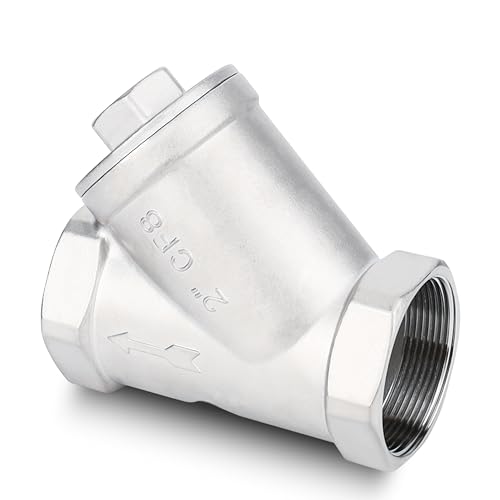
References: Single-acting Y filter design that traps impurities in the fluid with a built-in 80 mesh filter. The strainer is described as explosion-proof and wear-resistant, offering high-temperature durability and a long service life. Inner wall polishing provides a smooth surface to minimize scaling and clogging. Best for: industrial lines carrying water, oil, or gas where inline filtration is needed and space is limited. Limitation: larger models require more clearance in piping and mounting.
New Star Foodservice Chinois Mesh Strainer

References: Made from 18/8 stainless steel with an extra-fine mesh, reinforced construction, and a hollow handle for comfortable long use. It is ideal for creating smooth soups, bouillon, and stock while filtering out seeds, skins, and pulp. Best for: culinary operations and beverage production where fine filtration improves mouthfeel. Limitation: not specifically built for high-pressure industrial piping; more suited to batch processing in kitchens or prep areas.
Yiyiring 1/4″ Mesh Dip and Drain Strainer Basket

References: 304 stainless steel construction with a 1/4 inch precision mesh, designed to fit standard 2-gallon buckets for versatile parts cleaning. The basket provides efficient filtration and drainage, balancing effective cleaning with secure support. Best for: small mechanical parts, screws, nuts, gaskets, and bearings in auto shops or garages. Limitation: designed for bucket-based workstations; not a standalone inline filter for pipelines.
SYWUWV 1 Inch Y Strainer, 304 Stainless Steel

References: A compact Y strainer with 80 mesh screen designed for smaller lines. It shares explosion-proof and wear-resistant characteristics and features polished inner walls for reduced clogging. Best for: tight-space installations in process lines where inline filtration is required without increasing line diameter. Limitation: smaller screen area may require more frequent maintenance in highly contaminated fluids.
Fine Mesh Paint Strainer 60 Mesh

References: Ultra-fine 60 mesh stainless steel filter designed to remove fine particles from paint, inks, and coatings. The sturdy frame supports the mesh to prevent collapse under weight. Best for: paint shops and coating operations seeking smooth finishes and reduced grit in sprayed products. Limitation: not ideal for high-viscosity mixtures or solvents that require larger flow channels.
Buying Guide: Choosing The Right Stainless Steel Strainer For Industrial Use
- What is the primary application? Determine whether you need inline filtration in piping, a bucket-based strainers for cleaning parts, or a fine-pass filter for liquids like paint or sauces.
- Mesh size and filtration needs. Higher mesh (e.g., 60–80) captures finer particles but can reduce flow rate. Select a size that balances filtration efficiency with acceptable throughput.
- Material and durability. Stainless steel (304 or 316) resists corrosion and high temperatures. For aggressive fluids, confirm compatibility with chemicals in use.
- Installation and maintenance. Consider space, mounting options, and how easy it is to clean or replace the filter medium. Explosion-proof designs are valuable in pressurized or hazardous environments.
- Capacity and flow requirements. Larger Y strainer bodies handle higher debris loads; bucket-strainer baskets suit smaller workshops or test setups.
- Safety and compatibility. Ensure thread sizes (NPT, DN) match your piping; verify that gaskets and seals suit operating temperatures and pressures.
Frequently Asked Questions
- What is a Y strainer used for in industrial settings?
– It filters impurities in fluids, protecting equipment by trapping particles at a designated mesh level. - What mesh size is best for oil filtration?
– Mesh sizes around 80 are common for coarse debris, while finer meshes (60–100) suit cleaner liquids; choose based on debris load and flow. - Are stainless steel strainers resistant to corrosion?
– Yes, stainless steel offers corrosion resistance, with 304-grade common for general use and 316-grade for more aggressive environments. - Can these strainers be used in food and beverage applications?
– Some models, like the New Star Chinois mesh strainer, are suitable for culinary use; verify food-grade certification and compatibility for your facility. - Do inline strainers require maintenance?
– Yes, regular cleaning or replacement of the mesh prevents clogging and maintains flow efficiency. - What is the advantage of a bucket-compatible strainer?
– It simplifies hand-cleaning tasks, allows easy draining, and suits small-part cleaning workflows.
Add a Comment