In-line centrifugal pumps are compact, installation-friendly solutions for circulating water in heating, cooling, and light irrigation systems. This guide highlights five reliable options and explains who each is best for, so you can choose based on flow needs, voltage, and installation style. Whether you’re outfitting a residential loop, a small commercial setup, or a hobbyist water feature, the right inline pump improves efficiency and reliability without overcomplicating your system.
| Product | Best For |
|---|---|
| Bell & Gossett 1EF016LF | Residential heating or cooling loops requiring 1/4 HP in-line flow with solid head performance |
| Armstrong 174031-013 | Standard three-piece design for reliable circulating in compact lines |
| ZAOJIAO DC 12V Submersible In-Line | Submersible, low-voltage installations for decorative or small fountain/pond systems |
| MP Pumps MP50261 ILX 12V DC Inline Heater Booster | Inline booster for coolant loops in vehicles, equipment, or industrial settings |
| Bell & Gossett 1EF017LF | Higher-capacity inline pump for mid-range residential or light commercial loops |
Bell & Gossett 1EF016LF In-Line Centrifugal Pump

Best for: small residential heating or cooling loops needing a reliable, compact inline pump with a 1/4 HP motor and 115/230 V single-phase supply. The 1EF016LF is designed for steady, moderate head and flow in confined spaces.
- Key features: 1/4 HP, cast iron volute, compact 68 GPM max, 19 ft max head, 1.25″ x 1.25″ x 5.25″ size
- Best-use scenario: homes with hydronic floor heating or radiator loops where space is a constraint
- Limitation: modest max head means it’s best for shorter loops or smaller houses
Armstrong 174031-013 In-Line Circulator Pump

Best for: installations favoring a bronze-fitted cast iron body with a standard three-piece design and an oversized shaft for durability in longer running cycles.
- Key features: Bronze fitted cast iron, standard three-piece design, oversized shaft
- Best-use scenario: traditional hydronic systems requiring robust durability and straightforward maintenance
- Limitation: data does not specify max head/flow; rely on system compatibility and load requirements
ZAOJIAO DC 12V Submersible Inline Pump

Best for: small, low-voltage fountain, pond, or hydroponic setups where a submersible inline arrangement is preferred. This pump is non-self-priming and must be operated submerged.
- Key features: 1/2″ outlet, 800 L/H (210 GPH) max, 4 m (13 ft) max lift, 0°C–60°C operating range
- Best-use scenario: decorative water features or small irrigation lines where vertical lift is modest
- Limitation: not suitable for dry, non-submerged operation; venting is manual
ZAOJIAO DC 24V Submersible Inline Pump

Best for: low-voltage inline circulation in decorative or small-scale systems where 24V supply is available. Submersible design supports submerged installation and easy integration with solar or battery systems.
- Key features: 1/2″ outlet, 800 L/H (210 GPH) max, 4 m lift, 0°C–60°C range
- Best-use scenario: pond or fountain projects with space constraints and safe low-voltage operation
- Limitation: same as 12V variant—requires submersion and non-vented air handling
Goulds GT10 Irri-Gator Self-Priming Pump
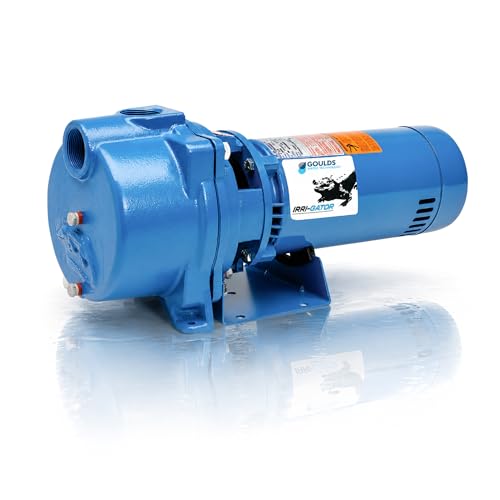
Best for: irrigation and water transfer where a higher head and consistent flow are required, with a self-priming capability for easier startup.
- Key features: 53 GPM max, suction lift 5–25 ft, max head 118 ft, 1 HP, 115/230V
- Best-use scenario: demanding irrigation setups or larger property watering needs
- Limitation: higher power draw; consider system sizing and electrical capacity
MP Pumps MP50261 ILX 12V DC Inline Heater Booster

Best for: inline booster and circulation in trucks, buses, and industrial equipment where a compact 12V DC pump is needed to maintain coolant or other fluids.
- Key features: 12 GPM max, 17 ft head, 3.5 GPM @ 4 PSI, 30 PSI max
- Best-use scenario: inline coolant recirculation or booster in compact equipment
- Limitation: DC operation requires compatible electrical supply and heat considerations
Bell & Gossett 1EF005LF In-Line Pump

Best for: mid-range flows in residential or light commercial loops with a focus on durability and efficient hydraulics.
- Key features: 3/4 HP, 108 GPM max, 28 ft head, 5.25″ impeller
- Best-use scenario: larger home heating loops or small commercial hydronic circuits
- Limitation: larger footprint than ultra-compact inline models
Bell & Gossett 1EF017LF In-Line Pump
Best for: higher-capacity inline applications within residential or light commercial loops requiring a robust 1/3 HP motor and strong head. The 1EF017LF offers ongoing reliability for daily operation.
- Key features: 1/3 HP, 75 GPM max, 24 ft head, 4.844″ impeller
- Best-use scenario: mid-sized hydronic circuits or radiant floor systems
- Limitation: heavier impeller and housing may require larger mounting space
Buying Guide: How To Choose The Right In-Line Centrifugal Pump
Consider flow rate (GPM), head (ft), voltage, motor enclosure, and installation space. Inline centrifugal pumps are not one-size-fits-all; matching system requirements with pump characteristics ensures efficiency and longevity.
What to check before buying
- System head and flow: Estimate the total head (lift plus friction losses) and target GPM. Choose a pump with a head above your maximum requirement and sufficient flow for your loads.
- Voltage and power supply: Select 115/230V models for typical houses or 12V/24V for low-voltage or mobile setups. Ensure electrical capacity and safety compliance.
- Materials and compatibility: Cast iron bodies are common for durability; consider brass, bronze, or stainless components if corrosion resistance is critical.
- Maintenance needs: Look for permanently lubricated bearings and unitized mechanical seals to reduce servicing. Consider ease of access for inspection.
- Footprint and mounting: Check the inline dimensions and flange connections to ensure proper fit within existing piping.
Inline vs. Submersible Considerations
Inline pumps are designed to be installed in the piping loop and circulate fluid in an enclosed system. Submersible options do not replace inline pumps; they are ideal for submerged setups such as ponds or fountains. In-line units are preferred where space, noise, and maintenance are concerns in HVAC and irrigation systems.
Maintenance and longevity tips
- Keep piping free of air locks; bleed air if necessary to maintain efficient flow.
- Inspect seals and bearings during routine service windows; replace worn parts promptly to prevent failure.
- Match pump curves to system demand; avoid running pumps well beyond their required head or flow, which wastes energy.
Common configurations and use cases
- Residential radiant floor heating: medium head, steady flow; a compact 1EF016LF or 1EF017LF can fit in tight spaces.
- Small commercial loop: higher head and durability; consider 1EF017LF or larger models for increased flow.
- Irrigation and water transfer: GT10 and similar high-GPM pumps suit irrigation; ensure power supply and electrical protection.
FAQ
- Q: What is an in-line centrifugal pump best used for? A: Circulating fluids in closed-loop systems such as hydronic heating, cooling, or irrigation lines.
- Q: How do I choose between 12V and 24V variants? A: Choose voltage based on your available power source and safety preferences; 24V is common for low-voltage installations, 12V for portable or solar setups.
- Q: Can inline pumps handle hot water? A: Many inline models are rated for typical heating fluids, but verify the temperature range in the product specs before use.
- Q: Do inline pumps require priming? A: Inline pumps are typically self-priming or designed for positive head; check the specific model’s priming requirements.
- Q: Is it necessary to size for head, not just flow? A: Yes. Head rating ensures the pump can overcome friction losses in the system; under-sizing leads to overheating and inefficiency.
- Q: Are cast-iron pumps suitable for all water types? A: Cast iron is versatile, but corrosive fluids or aggressive additives may require specialized materials.
Add a Comment