Looking for reliable, mechanical or digital oil flow meters to measure motor oil, lubricants, antifreeze, or diesel and gasoline with high accuracy? These five options cover a range from low-flow, high-viscosity liquids to high-flow diesel transfers. Best fits include shop technicians needing simple, battery-free operation, and industrial users requiring clear readouts and robust construction. The table below highlights each product’s strength and ideal buyer.
| Product | Best For | Key Strength |
|---|---|---|
| GRYVOZE 1/2″ NPT Digital Gear Flow Meter | Low-flow, high-viscosity oils | Three display modes; anti-electromagnetic interference |
| GRYVOZE Mechanical Oil Control Valve Flow Meter Dispenser Nozzle | Rugged shop environments | No batteries; mechanical precision; wide temperature range |
| GRYVOZE 1 Inch Mechanical Fuel Flow Meter | Diesel, gasoline transfers | Nutating disc, battery-free; high flow capacity |
| Lincoln 877 Mechanical Fluid Dispense Meter | Petroleum and synthetic oils in bulk | Odometer-style totalizer; high-flow 4 GPM |
| GRYVOZE 1/4″ NPT Digital Gear Flow Meter | Low-flow, high-viscosity liquids | Three-mode display; anti-interference |
GRYVOZE 1/2″ NPT Digital Gear Flow Meter

The GRYVOZE 1/2″ NPT Digital Gear Flow Meter is designed for low-flow, high-viscosity liquids such as motor oil, lubricants, and antifreeze. It features a multi-mode display with Instant Flow Rate, Single Measurement Flow, and Total Accumulated Flow. The device aims to deliver clear readings quickly, which is beneficial for technicians needing real-time data. It is also built to minimize electromagnetic interference, allowing stable operation near motors or welders.
Best for: Shops and laboratories handling motor oil, lubricants, or antifreeze where quick, clear readings matter. Better for users who need multiple display modes to track real-time and accumulated flow. Caution: The meter’s performance can be impacted by extreme electrical noise in highly industrial environments.
GRYVOZE Mechanical Oil Control Valve Flow Meter Dispenser Nozzle
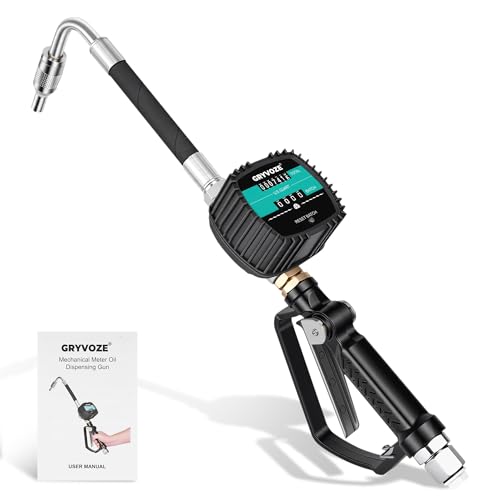
This oil dispenser nozzle uses a fully mechanical design, requiring no batteries, and covers a broad 0.26–9.25 GPM range with ±0.5% accuracy. It’s built for harsh environments with waterproof and dustproof protection and a wide operating temperature range. The dial offers clear, resettable batch measurements for precise dispensing in batch operations.
Best for: Industrial shops and service bays needing a simple, battery-free metering solution. Choose this if you require reliable mechanical operation in dirty or cold environments. Caution: May require manual calibration for long-term batch consistency in rapidly changing temperatures.
GRYVOZE 1 Inch Mechanical Fuel Flow Meter

The 1 Inch Mechanical Fuel Flow Meter uses a nutating disc metering system delivering up to ±0.5% accuracy. It’s designed for diesel, gasoline, and oil with a robust sealing system to minimize leakage during continuous transfer. Battery-free operation makes it suitable for remote or maintenance-heavy environments.
Best for: Bulk fuel transfer applications where high flow performance and mechanical reliability are critical. Better for users who need a sturdy, battery-free option. Caution: The larger 1-inch size may require more space and compatible piping in tight installations.
GRYVOZE 1/4″ NPT Digital Gear Flow Meter

This meter targets low-flow, high-viscosity liquids with ±0.5% accuracy and a 0.026–5.28 GPM range. It mirrors the GRYVOZE design language with a clear digital readout and anti-interference features to maintain stable operation near typical shop electrical noise sources. It is suited for precise measurements of motor oil, lubricants, antifreeze, or hydraulic fluids.
Best for: Smaller-volume applications and tight-line installations where precision in low flow is essential. Choose this if you need a compact, accurate meter with similar performance to the larger model. Caution: Narrower flow range may require more frequent reads for higher-volume tasks.
Buying Guide: Mechanical Oil Flow Meters And Digital Variants
What should you consider when selecting a mechanical or digital oil flow meter?
- Flow range and viscosity compatibility: Match the meter to the liquids you handle. High-viscosity oils and low-flow conditions need meters designed for low GPM and thick fluids.
- Accuracy: Most options target ±0.5% accuracy. Consider whether you need tighter tolerances for compliance or batch accounting.
- Power and installation: Battery-free mechanical meters perform reliably in dusty or damp settings. Digital meters with batteries require replacements and occasional calibration checks.
- Display and readability: Multi-mode displays help track instantaneous, cumulative, and batch flow. Choose models with clear dials or digital readouts appropriate for your workflow.
- Durability and operating environment: Waterproof, dustproof, and temperature-rated designs perform better in shop environments or outdoor setups.
- Installation size and piping: Inlet/outlet sizes (1/2″, 1″, 1/4″ NPT) determine compatibility with existing lines. Ensure space for mounting and clearance for hoses.
- Leak prevention: Sealing quality and material compatibility prevent leakage during high-volume transfers.
How to choose between digital and mechanical meters
Digital meters provide quick readings and data storage, ideal for traceability and auditing. Mechanical meters are battery-free, robust in harsh environments, and easier to service on-site. If you operate in a power-constrained area or require simple maintenance, mechanical meters are often preferable. For precise data logging and advanced reporting, digital options can better support your needs.
Key features to compare
Look for three-mode or multi-mode displays, anti-interference design, automatic shut-off or battery indicators, and large dial readability. For high-temperature or outdoor use, prioritize weatherproof and temperature-rated constructions. When measuring multiple fluids, verify the unit’s compatibility with motor oil, transmission fluids, antifreeze, or fuels.
Installation tips
Follow manufacturer recommendations for inlet/outlet alignment and torque. Use appropriate gaskets and seals to minimize leakage. Check for proper alignment with piping to avoid stress on the meter and ensure a clear view of the display during operation.
FAQ
- What is a mechanical oil flow meter? A device that measures the volume of oil or similar liquids transferred, often without the need for external power, using a mechanical metering mechanism.
- Which is better for low-flow measurements? Digital or mechanical meters designed for low-flow ranges (often in 0.026–6.6 GPM) are better; ensure the device supports the liquid’s viscosity.
- Can these meters handle high-viscosity oils? Yes, many models are designed for high-viscosity or low-flow liquids like motor oil and lubricants.
- Do these meters require calibration? Mechanical meters typically require periodic checks; digital meters may require battery maintenance or recalibration in some cases.
- Are these meters suitable for fuels? Some models are designed for diesel or gasoline transfers; verify compatibility with your specific fuel type and sealing requirements.
- What installation considerations matter? Inlet/outlet size, installation space, and environment (dust, moisture, temperature) influence the best choice.
Add a Comment