Find the right test-port ball valve for backflow prevention, maintenance, and reliable shutoff. This guide highlights five options that balance durability, ease of testing, and compatibility with residential water systems. Best for homeowners, contractors, and DIYers who need to connect test gauges or perform pressure testing during installation or service.
| Product | Best For | Key Feature | Material |
|---|---|---|---|
| Saillong Brass Backflow Ball Valve with Test Port | Residential potable water systems | Integrated test port for backflow testing | Brass |
| WHK 1 Inch Lead-Free Bronze Backflow Ball Valve with Test Port | Outdoor sprinkler and irrigation lines | 1-inch FPT with test port, durable bronze | Lead-free bronze |
| AQUALINE Lead Free Brass Ball Valve W/Test Port | General plumbing with test needs | Lead-free brass with test port | Brass |
| CMI Rust Proof Full Port Brass Test Valve | Testing and maintenance in varied environments | Bleeder/drain features for testing and maintenance | Brass |
| VALFLUIDS Full Port Forged LF Brass Ball Valve | General-purpose testing and flow control | Full port, NPT, 150 PSI WSP / 600 PSI WOG | Lead-free brass |
Note: Each product below is evaluated for test-port capability, durability, and suitability for typical home plumbing. Consider how often you’ll perform pressure tests, your water quality, and local code requirements when selecting a valve.
Saillong Brass Backflow Ball Valve With Test Port

Best for: Homeowners needing a reliable backflow-compliant valve with a built-in test port. Why chosen: It combines heavy-duty brass construction with a test port for easy pressure readings, aiding compliance and maintenance. The full-port design minimizes pressure drop, while the quarter-turn shut-off provides quick operation. Caution: Ensure thread compatibility with existing FPT connections to avoid leaks.
WHK 1 Inch Lead-Free Bronze Backflow Ball Valve With Test Port

Best for: Outdoor sprinkler or irrigation systems needing durable bronze hardware. Why chosen: 1-inch FPT with an integrated 1/8 NPT test port supports inspection pressure tests. Caution: User should verify compatibility with the water source and confirm lead-free compliance for potable use.
AQUALINE Lead Free Brass Ball Valve W/Test Port

Best for: Projects requiring a lead-free brass valve with a dedicated test port. Why chosen: Lead-free brass and FNPT connections support standard plumbing configurations, while the test port enables straightforward pressure verification during installation or service. Caution: Data confirms FNPT-to-FNPT compatibility; verify pipe threading before purchase.
CMI Rust Proof Full Port Brass Test Valve
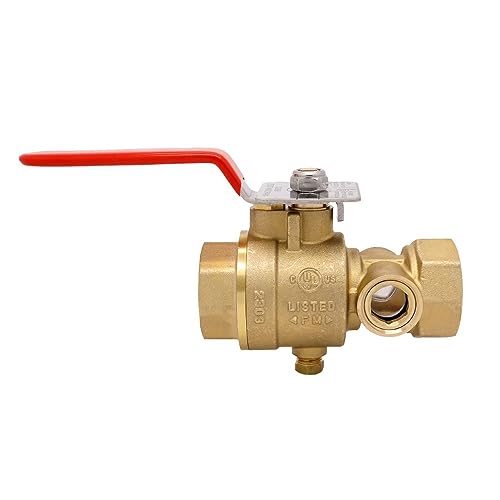
Best for: Maintenance-focused installations needing a bleed or drain feature during testing. Why chosen: The valve is built from lead-free brass with a drain/bleeder option, aiding testing and maintenance tasks. Caution: Data indicates robust construction; verify the specific bleed valve size matches your testing equipment.
VALFLUIDS Full Port Forged LF Brass Ball Valve

Best for: General testing and flow control in compact spaces. Why chosen: Full-port, lead-free brass with NPT connectors supports typical home plumbing layouts and moderate pressure testing (150 PSI WSP / 600 PSI WOG). Caution: Check overall valve size to ensure it fits existing plumbing footprints.
Buying Guide
Do I need a test port on a ball valve?
A test port simplifies pressure testing, backflow verification, and maintenance. It is especially important in systems with backflow prevention requirements or where periodic testing is mandated by code.
What material should I choose?
Brass and bronze are common for residential plumbing. Lead-free variants reduce regulatory concerns for potable water. Choose materials based on water quality, outdoor exposure, and local codes.
What size and connection type do I need?
Most home systems use 1/2″, 3/4″, or 1″ sizes with FNPT or FPT connections. Verify thread type and existing pipe dimensions. A full-port valve minimizes flow restrictions and improves test readings.
Durability and compliance considerations
Look for valves rated for your pressure range and temperature. Lead-free construction and compliance with CSA/UPC/ANSI standards help ensure safe potable-water use. A bottom-loaded stem and blowout-proof design improve reliability in high-usage areas.
Maintenance and usage tips
- Keep test-port caps tight but accessible for regular testing.
- Lubricate threads if recommended by the manufacturer to prevent seizing.
- Inspect for corrosion, especially in outdoor installations or in chlorinated water.
FAQ
- What is a test port on a ball valve? A test port is a small threaded opening that allows connection of pressure gauges or testing equipment to verify system pressure and backflow safety.
- Is a test port necessary for residential plumbing? It is often recommended when backflow prevention or periodic testing is required by code or system design.
- Are these valves lead-free? Several options are described as lead-free brass or bronze, suitable for potable water when compliant with local codes.
- Can I use these valves for outdoor irrigation? Yes, especially models with bronze or weather-resistant construction.
- What size should I choose? Match the valve size to your pipe diameter (commonly 1/2″, 3/4″, or 1″).
Add a Comment