Answering a common question from new and seasoned aquarists: the right water purifier for a fish tank mainly means a trusted water conditioner or clarifier that neutralizes chlorine and removes harmful chemicals, improves clarity, and supports a stable, healthy environment. The top picks below are best for hobbyists maintaining freshwater tanks of various sizes, from nano to community tanks. Each product is chosen for practical use, compatibility with common filtration, and clear guidance on who benefits most.
| Product | Best For | Key Benefit |
|---|---|---|
| API TAP WATER CONDITIONER 16-Ounce | New setups and water changes | Neutralizes chlorine and chloramines; protects gills and tissue |
| API ACCU-CLEAR Freshwater 8-Ounce | Cloudy water issues | Clumps particles for easy filtration |
| KloudAway Freshwater Water Clarifier (500 ml) | Clear water fast in larger tanks | Fast-acting flocculation of particles |
| Aqueon Freshwater Water Clarifier 8 Oz | General clarity in community tanks | Bind particles for filtration |
| Tetra AquaSafe Plus 33.8 Ounces | Overall water safety for freshwater tanks | Dechlorinator and slime coat protection |
API TAP WATER CONDITIONER Aquarium Water Conditioner 16-Ounce Bottle

Features include neutralizing chlorine, chloramines, and other chemicals to make tap water safe for fish. It helps prevent tap water chemicals from causing gill destruction and tissue irritation. Best for new aquariums or regular water changes in small to medium tanks. Caution: follow dosing guidelines to avoid over-conditioning in very small setups.
API ACCU-CLEAR Freshwater Aquarium Water Clarifier 8-Ounce

This clarifier helps cloudy water by clumping suspended particles so they are easily removed by your filter. Best for tanks with ongoing particulate suspension due to feeding or biological activity. Choose this if you need quicker, clearer water without changing filtration. Limitation: does not treat green water caused by algae growth.
KloudAway Freshwater Aquarium Water Clarifier (500 ml)

Fast-acting formula that clears cloudy water by clumping floating particles for mechanical filtration. Best for larger nano or small to mid-sized tanks. Not effective on green water algae. Safe for freshwater fish, plants, shrimp, and invertebrates; avoids disrupting beneficial bacteria. Caution: requires a functioning mechanical filter to remove clumped debris.
NICREW Slim Aquarium Filter, 42 GPH (5 Gallon)

Compact filter designed for nano tanks up to 5 gallons. Best for small shrimp or betta setups where space is limited. Features a patent-pending priming system and auto restart after power outages. Better for tanks with gentle flow requirements; not a primary water conditioner, but supports water clarity when paired with clarifiers.
Tetra AquaSafe Plus, Aquarium Water Conditioner and Dechlorinator (33.8 Ounces)
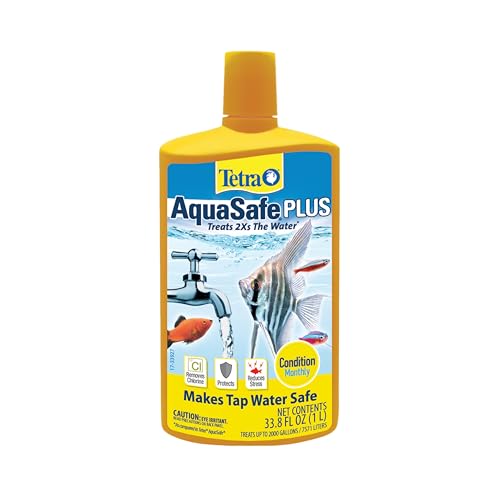
For freshwater and marine aquariums, AquaSafe Plus makes tap water safe immediately by neutralizing chlorine, chloramines, and heavy metals. It also supports the fish’s protective slime coat to aid wound healing. Best for community tanks or mixed-species setups. Limitation: larger bottles may be overkill for very small tanks; dosing should align with tank size.
Aqueon Freshwater Aquarium Water Clarifier, 8 Ounces

Helps quickly clear cloudy water by binding suspended particles for filtration. Best for general freshwater tanks with floating debris after feedings or organic buildup. Suitable for tanks with plants and fish when used as directed. Caution: not a substitute for a functioning filtration system or regular water maintenance.
Tetra AquaSafe Plus 3.38 Ounces

Compact option for smaller tanks or travel setups, offering immediate water conditioning and dechlorination. Best for small tanks or backup use. Limitation: smaller bottle may require more frequent dosing in larger tanks.
Buying Guide
What should you look for when choosing a water purifier for a fish tank?
- Tank size and water changes: Larger tanks may benefit from bigger bottles or combined use with clarifiers for quick results.
- Filtration compatibility: Clarifiers work best with a functional mechanical or canister filter that can trap clumped particles.
- Water quality issues: Use dechlorinators for chlorine/chloramines and clarifiers for turbidity; green algae requires a separate approach.
- Safety for inhabitants: Choose products labeled safe for freshwater fish, plants, shrimp, and invertebrates if you keep such species.
- Usage guidelines: Always follow dosing instructions to avoid overdosing, especially in nano or lightly stocked tanks.
FAQ
- What is the difference between a water conditioner and a water clarifier?
Answer: A conditioner neutralizes chlorine and chloramines to protect fish, while a clarifier helps particles clump together so the filter can remove them, improving water clarity. - Can I use multiple products at once?
Answer: It’s best to use one conditioner or clarifier at a time and follow the manufacturer’s instructions to prevent chemical interactions. - Which product is best for a new tank setup?
Answer: A conditioner like API Tap Water Conditioner is essential for new setups to safely acclimate fish to tap water. - Do water clarifiers harm beneficial bacteria?
Answer: Reputable clarifiers are formulated to avoid harming beneficial bacteria, but avoid applying them when biological filtration is overwhelmed. - How often should I use these products?
Answer: Use conditioners with each water change; use clarifiers only as needed for cloudy water or debris, following label directions.
Add a Comment