If you need reliable rooftop ventilation, this guide highlights top industrial roof exhaust fans that deliver strong airflow, durability, and low maintenance. Suitable buyers include restaurant owners, warehouse managers, factory supervisors, and facility engineers seeking durable, high-CFM solutions. The following selections balance power, noise levels, and weather resistance to help you choose the right fit for heat removal, smoke control, and odor management on busy rooftops.
| Product | Best For | CFM Range |
|---|---|---|
| PrecisionAuto 1400CFM | Small- to medium-size commercial kitchens and warehouses | 1400 CFM |
| BouPower 2400 CFM | Active workspaces with higher heat and odor load | 2400 CFM |
| VEVOR Roof Exhaust Fan (5000 CFM) | Large kitchens, garages, or workshops needing strong airflow | 4000–5000 CFM |
| Hakazeni 1500CFM | Residential-to-light commercial attic and garage spaces | 1500 CFM |
| CXRCY 1400 CFM | Factories, restaurants, and warehouses seeking all-copper efficiency | 1400 CFM |
PrecisionAuto 1400CFM Industrial Upblast Fan
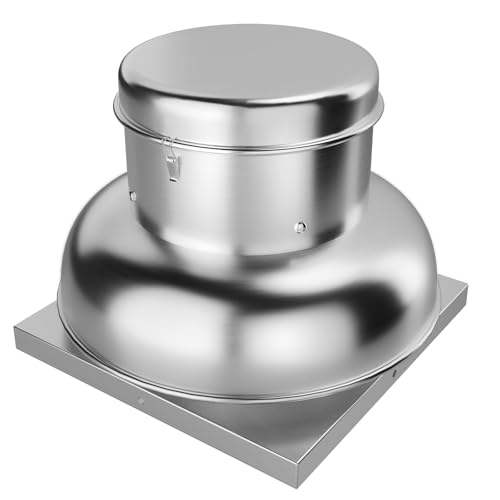
Best for compact commercial spaces with steady heat and smoke removal needs. This upblast, direct-drive unit delivers 1400 CFM with a durable stainless steel frame for weather resistance. The direct-drive motor minimizes moving parts, reducing maintenance in demanding environments. It operates quietly relative to its airflow, supporting neighborhoods and staff comfort.
Who it’s for: small to mid-sized kitchens, workshops, or warehouses needing reliable, high-speed exhaust without heavy noise. Choose this if you want a straightforward installation and a robust metal build. Caution: ensure rooftop clearance and ducting compatibility with a 1400 CFM target to avoid underutilization.
BouPower 2400 CFM Upblast Roof Exhaust Fan
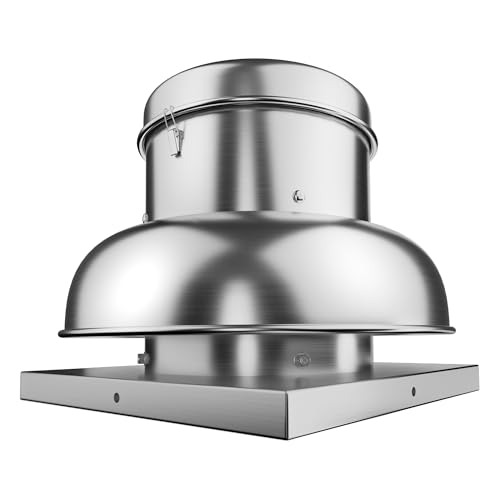
Best for spaces with higher ventilation demands, such as bustling kitchens or large warehouses. This 2400 CFM upblast fan uses a robust motor and a solid 25 by 25-inch base for stable rooftop installation. It’s designed to reduce heat, smoke, and odors efficiently while maintaining a quieter operation for a more comfortable workspace.
Who it’s for: facilities requiring stronger ventilation without excessive noise. Better for larger footprint spaces where consistent airflow is critical. Caution: installation may require reinforced mounting to support the heavier base on certain rooftops.
VEVOR Roof Exhaust Fan (5000 CFM Adjustable)

Best for large volumes of air in industrial settings, this unit offers adjustable airflow within a high CFM range. Its aluminum alloy base and housing provide corrosion resistance and sturdy support for heavy-duty daily use. Two intelligent speed controllers enable flexible operation to match changing ventilation needs in factories or big kitchens.
Who it’s for: facilities needing up to 5000 CFM with adjustable speeds for different shifts or seasonality. Choose this if you want precise airflow control. Caution: high-power operation requires careful electrical planning and proper rooftop clearances to prevent over-ventilation in smaller spaces.
FICBXRA Roof Exhaust Fan 800 CFM

Best for general ventilation in light commercial settings, such as food trucks or small kitchens. This high-speed direct-drive centrifugal downblast fan delivers 800 CFM and uses a lightweight, corrosion-resistant aluminum construction that’s easy to install on roofs or walls. It is not designed for grease-heavy exhausts, which is a key limitation to consider.
Who it’s for: smaller restaurants or mobile kitchens needing dependable airflow without bulky equipment. Choose this if grease is absent or managed separately. Caution: not suitable for grease-laden exhaust environments.)
Solar Blaster Solar Mega RoofBlaster

Best for off-grid or sun-powered ventilation needs on shipping containers or remote structures. This solar-powered vent uses sunlight to drive airflow, offering passive cooling when electricity isn’t present. It’s a practical solution for containers in sunny locations, with the added benefit of continuing to vent hot air after sunset via natural convection.
Who it’s for: remote sites, solar-powered projects, or areas with unreliable electrical service. Choose this if you want a maintenance-light, energy-saving option. Caution: solar performance depends on sun exposure and may be lower on overcast days.
VEVOR Roof Exhaust Fan 5000 CFM

Best for large industrial spaces requiring substantial ventilation throughput with adjustable speeds. This model features a 24.8-inch fan base and an aluminum alloy housing, designed for durability in kitchens, garages, and warehouses. It offers two intelligent speed controllers to fine-tune airflow from 4000 to 5000 CFM, balancing power with energy use.
Who it’s for: big facilities or multi-zone operations needing scalable ventilation. Choose this if you anticipate seasonal adjustments or peak-load conditions. Caution: higher CFM units may demand stronger roof support and electrical capacity.
Buying Guide: Key Considerations For Industrial Roof Ventilation Fans
How do you choose the right rooftop fan for your facility? Start with airflow needs (CFM), roof structure, and noise tolerance. Consider motor type, durability, weather resistance, and ease of installation. A direct-drive motor typically reduces maintenance by eliminating belts, while all-metal housings provide longevity in harsh outdoor conditions.
- CFM vs. space size: Match the fan’s CFM to the volume of the space. Oversized fans may introduce unnecessary noise and energy use; undersized units fail to remove heat effectively.
- Mounting and base size: A stable base is essential for rooftop safety. Confirm base dimensions align with your roof openings and structural capabilities.
- Motor and materials: All-copper or high-quality aluminum housings improve efficiency and corrosion resistance. Weatherproofing protects against rain, UV exposure, and wind.
- Noise considerations: For areas adjacent to offices or living spaces, prioritize models designed for lower noise operation while maintaining airflow.
- Power and controls: Adjustable-speed options help tailor airflow to shifting conditions. Ensure electrical infrastructure supports the chosen model.
Frequently Asked Questions
- What airflow rating do I need for a kitchen exhaust?
Typically 1000–3000 CFM for small to medium kitchens; larger kitchens may require 4000–6000 CFM or more. - Are rooftop fans easy to install on existing roofs?
Many models are designed for simple top-side mounting, but you may need structural assessment and professional wiring. - Should I choose a belt-driven or direct-drive fan?
Direct-drive fans have fewer moving parts and lower maintenance; belt-driven models can be cheaper but require more upkeep. - Is aluminum sufficient for outdoor use?
Aluminum and steel alloys offer good corrosion resistance, but ensure weatherproof sealing and motor protection for long-term performance. - Can solar-powered roof vents replace electric fans?
Solar vents work well for off-grid or sun-rich locations but may be less consistent on cloudy days or at night. - What safety checks are needed after installation?
Inspect mounting hardware, electrical connections, and any ductwork for leaks or obstruction periodically.
Add a Comment